The future belongs to those who can turn an operational data moat into something agents can reason on, decide from, and act through. The model layer commoditizes; the trust layer doesn't. That turn requires semantic infrastructure, delivered through a domain-specific capability, with scaled execution and global reach.
No single asset reaches Era Three alone. Data at depth does not reason on its own. Semantic infrastructure has nothing to stand on without data beneath it. Together they become the Platform Value Office spanning the full arc: mobilizing data from operating partners, refining it into resolved, governed, semantic infrastructure, then activating agents on top.
Products stop at the silo. The services business does not: across asset classes, across geographies, into white space no incumbent has reached.
Three eras of real assets software
Real assets software has been built around one consumer at a time, in three eras. The first two are largely complete. The third is open. The combined entity is what consolidates Era One leadership with the foundation Era Three runs on.
Built to capture
Consumer: Finance, accounting, audit.
Architecture: ERP and systems of record.
Exemplars: Yardi, MRI, RealPage (OneSite, RUM, Knock, G5), Entrata, AppFolio. Captured transactions, enforced workflows, stored operational data. The system of record served the human reading the ledger.
Built to inform
Consumer: Analysts via BI and dashboards.
Architecture: Data warehouse, cloud SaaS, analytics.
Exemplars: Snowflake, Databricks, Cherre Connect, sector analytics platforms. Aggregated and presented data for human interpretation. The dashboard served the human reading the report.
Built to act
Consumer: AI agents, autonomous workflows.
Architecture: Knowledge graph, context graph, decision graph.
Exemplars: Cherre's CONNECT, CORE (Luna · Meridian), and ALPHA (ATLAS · Agent STUDIO); RealPage's Lumina; agentic platforms still forming. The foundation serves the agent: reason against, decide from, act through. RealPage operates at Era One and reaches into Era Two. The combined entity consolidates Era One leadership with Era Three architecture.
The AI agent is not the next user. The agent is a different kind of consumer. It does not read reports; it reads data directly. It does not infer context from the conversation in the room; the context has to live in the architecture. It does not remember what was decided last quarter; the memory has to be queryable. Era Three software is what real assets architecture looks like when the consumer is the agent.
Three eras of real assets software, illustrative
Each era's advantage compresses as the next one opens. The combined entity sits at the Era Three inflection: an established Era One operator footprint (RealPage), the Era Two analytics layer that has not solved real assets at foundation depth, and the open Era Three foundation the combined entity is built to own.
The defensive case: reproducibility is the next audit standard
Audit committees, regulators, and IC processes are starting to ask a question they did not ask a few years ago: how was this decision made, by which model, against which version of which definition, with what supporting evidence. Today the question is answered with shrugs and post-hoc reconstructions. Within a short horizon the answer becomes an audit finding. The shift from "the report was correct" to "the reasoning was reproducible" is structural; it will not reverse with any administration's regulatory posture, because the fiduciary obligation driving it is older than the regulators. Institutions that cannot reproduce their AI-assisted decisions absorb the reproducibility gap as a fiduciary risk before it becomes a compliance one. The infrastructure that produces reproducibility is not the infrastructure that produces good dashboards. The two have been confused. They are not the same thing.
The data mobilization gap
Operating partners generate the data. GPs and LPs need to consume it: quickly, accurately, and at scale. The gap between generation and consumption is filled today by manual processes, brittle spreadsheet pipelines, and point solutions that don't talk to each other. CONNECT and CORE are built to close this gap at the infrastructure layer.
Real assets is ripe for agentification
Industry leaders like Brookfield and Blackstone have already started the agentic journey. The rest of the market is catching up at varying levels of data and AI maturity. Firms that get their data infrastructure right now will be the ones who deploy AI meaningfully. Those that don't will be locked out when the window closes.
FDEs meet clients where they are
Forward Deployed Engineers (FDEs) offer readiness assessments, data engineering, agentic design and build, and optimization services. This is not a one-size-fits-all product play. It is a high-touch, expert-led capability that unlocks value at every point on the client maturity curve, from data clean-up to full agentic deployment.
The market maturity curve
| Maturity level | Where most firms are today | What they need | Entry product |
|---|---|---|---|
| Early, Data chaotic | Manual collection, fragmented systems, no single source of truth for fund data | Data mobilization, standardization, reliable pipeline from operating partners | CONNECT |
| Developing, Data structured | Data lives in systems but is not consistently validated, enriched, or governed | Ongoing management, QA, and enrichment at scale without internal headcount burden | CORE |
| Advanced, Data ready | Clean, structured data in place; executive pressure to get value from AI | FDE use case design, deployment, and ongoing optimization | ALPHA |
| Leaders, AI native | Brookfield, Blackstone, actively building AI capabilities internally | Co-development, frontier capability deployment, optimization of existing agents | FDE Specialist Track |
Why this converges
- Data quality is the prerequisite for AI; firms cannot run reliable agents on bad data. CONNECT and CORE build the foundation that makes ALPHA valuable.
- The product ladder is the growth model: land with CONNECT, expand to CORE, graduate to ALPHA; each step increases switching cost and contract value.
- FDEs are the connective tissue; they are the reason clients move up the ladder rather than stalling at the first product.
- Real assets is underserved relative to other asset classes in both data infrastructure and AI tooling. First-mover advantage is real and the window is open now.
This work has a name and a home: the Platform Value Office. Three directions of value: back to the software business, across asset classes, across geographies. Two capability vectors operate beneath it, forming a closed loop.
Both vectors stand up in Phase 01. Vector 1: the FDE cohort is hired in Q1. Vector 2: CONNECT onboarding recombines existing Cherre and RealPage teams; Data Services Support is stood up new under unified CX leadership, on RealPage's existing Data Services delivery capacity. Phase 02, which opens the EMEA pod, does not begin until Phase 01 clears.
Forward Deployed Engineering for AI
Build and scale an FDE capability to support AI readiness assessments (where is the client on the maturity curve?), AI agent deployment (design, build, and go-live of agentic workflows), and client optimization of AI tools including ATLAS. FDEs are technical, embedded, and outcome-accountable. They are not a support function.
CONNECT Deployment & Data Services
Scale a deployment and support capability for CONNECT that covers technical implementation (onboarding, integration, data pipeline setup) and ongoing support through Data Services. This is the operational backbone that sustains the data quality clients depend on before and during AI deployment. Data Services is the function where the combined entity inherits the largest asymmetry: Cherre delivers Data Services through partner relationships rather than natively; RealPage owns a native Data Services practice run from in-house delivery centers in India and the Philippines. Phase 01 work integrates the owned delivery centers and Cherre's partner network as a managed delivery portfolio: owned capacity for predictable, repeatable workloads at scale; partners for surge, regional reach, and specialty coverage. The mix is actively managed.
Building sequence, what gets built first
- Define FDE hiring profile and 90-day ramp model
- Establish CONNECT onboarding playbook from existing deployments
- Launch CORE as a packaged, contractable service offering
- Run first AI readiness assessments with anchor clients
- Instrument the product ladder; track expansion signals from CONNECT clients
- Scale FDE team regionally (NA → EMEA)
- Productize the AI readiness assessment: fixed scope, repeatable output
- Build FDE for Agents specialist track with its own hiring and comp model
- CONNECT Onboarding Team at capacity; Data Services Support Team established
- First EMEA fund admin channel relationships active
- APAC FDE presence (Singapore hub)
- ALPHA at scale across all Ideal Customer Profile (ICP) segments
- In-house CONNECT data engineering capability; partner model for niche sourcing only
- FDE as a durable competitive moat in every active market
- Cross-regional knowledge transfer cadence established
Competition splits into five structural cohorts that travel across regions. None occupies the foundation position the combined entity is built around; the integrated CONNECT + CORE + ALPHA stack is the differentiator at every layer.
Motivated competitors have the capital. They do not have the foundation or the window. The acquisition closes both.
The competitive landscape splits into structural cohorts that travel across regions. Operator ERPs (Cohort 1) and operator AI surfaces (Cohort 2) compete at the application layer. Institutional reporting platforms (Cohort 3) and analytics platforms (Cohort 4) compete at the data layer. Horizontal AI infrastructure (Cohort 5) competes through both vertical acquisition (data platforms) and hyperscaler-LLM partnerships arming new vertical AI plays. Cherre's foundation position is at the layer that does not yet have an incumbent. Institutional in-house builds (sovereign wealth funds, large LPs) are addressed in Section 05 as buyer archetypes, not as competitors.
| Cohort | Representative competitors | Position today | Why the combined entity is ahead, and for how long |
|---|---|---|---|
| Cohort 1: Operator ERP | Yardi, MRI Software, Entrata, AppFolio, Inhabit IQ (incl. ResMan) | Deep property management workflows across multi-asset platforms (Yardi, MRI) and multifamily-focused operators (Entrata, AppFolio, Inhabit IQ); large installed base; growing AI investments across the cohort (Yardi Virtuoso, MRI Agora). | Operational AI is bounded by the data silo it sits on. The combined entity governs the foundation they would need to acquire. |
| Cohort 2: Operator AI surface | Yardi Virtuoso, MRI Agora, AppFolio Realm-X, Entrata ELI, Inhabit IQ (incl. ResMan), Elise AI, Funnel Leasing | AI products embedded in or alongside Cohort 1 systems. Resident communications, leasing, marketing automation. | Lumina is the only AI in this cohort that runs on a governed foundation. Surface plus foundation is structurally different. |
| Cohort 3: Institutional reporting | eFront (BlackRock), Juniper Square, Allvue / iLevel, Mercatus, Chronograph | LP reporting, fund admin portals, portfolio monitoring. eFront dominant in EMEA; Juniper Square strong in NA; Mercatus and Chronograph cross-region. Era Two adjacencies; each governs one slice. | Reporting sits above the foundation. Multi-source operating partner aggregation is a different architectural problem; the foundation is multi-slice and decade-compounding, not a single roadmap extension. |
| Cohort 4: Analytics and valuation | CoStar Group, MSCI / Real Capital Analytics, Altus Group, 73 Strings | Commercial real estate analytics, market data, and valuation. CoStar dominates CRE analytics and market data at scale (also owns LoopNet, Apartments.com, Homes.com, STR). MSCI / RCA owns institutional transaction data and indices. Altus owns valuation; 73 Strings is the AI-native challenger. All consume data; none govern it. | Analytics consumes the foundation; does not replace it. The AI-native version of analytics does not change the layer. |
| Cohort 5: Horizontal AI infrastructure | Snowflake, Databricks, Palantir, plus hyperscaler-LLM partnerships (AWS + Anthropic, Microsoft + OpenAI, Google Cloud + Gemini) | Two flavors. Data platforms (Snowflake, Databricks, Palantir) compete via vertical acquisition; Palantir closest in posture (FDE practice, vertical depth). Hyperscaler-LLM partnerships are the infrastructure behind recent vertical AI plays (as of mid-2026): the Anthropic + Blackstone + Goldman $1.5B real estate deal runs on Bedrock; the OpenAI + Brookfield + TPG $10B deal runs on Azure. | Acquisition path closes for data platforms; the obvious target leaves the market. Partnership path: model access is commoditizing while the operational data those partnerships need to reason against is not. The trust layer is the defense in both cases. |
Multiple credible standards exist for the real assets data landscape: RETTC/MITS, REDI, NCREIF, OSCRE, INREV, and others. None connects to the others without manual reconciliation, and manual reconciliation does not survive contact with AI agents. CORA, the Common Ontology for Real Assets, does not compete with the standards bodies; it operates at the layer above them. It performs two functions no individual body is structured to perform for itself or its peers: n-way correspondence across the full landscape and longitudinal drift tracking. CORA is the standard of standards. Cherre's canonical layer is its operational implementation. See coradata.org for the public initiative.
What the meta-layer codifies: the drift taxonomy
Standards do not sit still. They evolve under their own governance, in their own cadence, against their own audiences. The drift across them is not noise; it is the structural problem the meta-layer exists to solve. CORA names three drift types.
Structural drift
The schema reorganizes. Same concept, new shape. Mappings that relied on the prior structure break silently. Without a meta-layer that pins the prior structure and annotates the change, downstream agents inherit a broken dependency they cannot detect.
Semantic drift
A concept's definition narrows, broadens, or is redefined. The label stays the same; the meaning does not. Comparability across time degrades silently. The audit trail says "OperatingExpense" was reported in both periods; only the meta-layer records that the definition moved between them.
Coverage drift
The standard expands or contracts. The scope of what is covered changes. Whole-domain gaps appear in cross-standard reconciliation when one body extends into territory another has retreated from. The meta-layer is what makes the gap visible before downstream systems silently consume it.
CORA operationalizes the drift taxonomy as a drift register: a neutral, public, version-pinned, machine-readable record of where and when drift occurs across the full standards landscape. Each entry captures what changed, why it matters downstream, and traces back to source documents. The register is the citable artifact. Cherre's canonical layer is the operational implementation. The platform applies the n-way correspondence and the drift annotations in production so that an agent reasoning on top of it does not silently break when an underlying standard moves.
The bodies the meta-layer spans
Below the meta-layer sit the standards bodies the drift register tracks. Cherre is seated in the four most relevant to the combined entity's product portfolio.
RETTC
Cherre seated. The Real Estate Technology & Transformation Center owns the MITS (Multifamily Information Transaction Standards) data model and APIs, covering property marketing, leasing, screening, and transactions across multifamily rental housing. Operator-side, multifamily-only. Aligns to RP Core.
REDI
Cherre seated. The Real Estate Data Initiative is investor-led and produces a single data model that operationalizes existing standards (INREV, NCREIF) rather than replacing them. Covers closed-end, open-end (APAC, EU, NA), and SMA institutional vehicles. Aligns to CONNECT and AIM Core.
NCREIF
In active discussions. National Council of Real Estate Investment Fiduciaries; the Chart of Accounts initiative standardizes operating revenue and expense coding for institutional performance benchmarking and the NCREIF Property Index. LP-side benchmark. Aligns to CONNECT and AIM Core.
OSCRE
In active discussions. Open Standards Consortium for Real Estate; the Industry Data Model spans 130+ use cases and 1,000+ entities across operator and institutional real estate, with downloadable JSON and XML schemas. The broadest cross-segment model of the four.
The standards landscape maps cleanly onto Cherre's product cores. RP Core (multifamily, operator-side) sits where RETTC/MITS owns the rental-housing data exchange. CONNECT and AIM Core (LP, institutional) sit where REDI and NCREIF anchor the institutional reporting and benchmarking work. OSCRE spans both as the broadest cross-segment model. Cherre's seats are secured on the segment-specific bodies that mirror its product cores (RETTC on the operator side, REDI on the institutional side) and in discussion on the institutional benchmark (NCREIF) and the cross-segment model (OSCRE). Both halves of the product portfolio are already represented in the rooms where standards are being formed.
REDI's stated approach is to operationalize INREV and NCREIF rather than replace them. This is the same logic CORA codifies one layer up. The standards bodies that matter are already converging on the "connect existing standards, do not invent a new one" model. The structural risk a sophisticated diligence team will look for is whether a vendor-neutral standard could emerge that commoditizes the semantic layer. The answer reverses the question. Cherre is not a participant in the standards being commoditized. Cherre operates the layer above them: the n-way correspondence, the drift register, the operational implementation of the meta-layer. The firm that implements the meta-layer is not displaced by the standards converging beneath it. The firm that implements the meta-layer is the firm the convergence runs through.
Cherre is not a participant in the standards. Cherre operates the trust layer above them.
Four buyer archetypes, organized by position in the capital stack. Each archetype has a distinct door, buying motion, and conversion cadence. The Phase 01 anchor account is a sovereign-scale LP engagement that brings 900 global operating partners into contact with a governed data foundation. Those 900 partners are the Phase 02 pipeline; each one is a GP, Asset Manager, or Operator in its own right, addressable through the foundation they already touch. The Institutional Asset Manager archetype is the primary direct-sales pipeline running concurrent with the anchor hub; the GP and Operator archetypes convert fast-cycle in parallel; mid-tier LPs follow as the LP archetype's broader pipeline from Phase 02. Warm pipeline from AIM, IMS, Cherre, and RealPage relationships is the channel into each archetype, not the archetype itself.
Which accounts in the existing book carry mandates that already depend, in practice, on the foundation the combined entity provides, even where the requirement is unstated?
| Buyer archetype | Door (primary product) | Buying signal | Buying motion | Conversion heat |
|---|---|---|---|---|
| Limited Partner Sovereign wealth, large public pensions, endowments, insurance allocations; GIC, Temasek, CPPIB, ADIA, NBIM as the leading edge. Cherre clients: OTPP, New York Life. In discussions: HOOPP. |
CONNECT and CORE; ALPHA in long arc | CIO data commitment; manager rationalization; in-house data team build; cross-asset mandate | CIO-led, often by committee with Head of Investment Operations. Long cycle, large contract values, heavy governance. 12 to 18 month cycle for sovereign-scale; 18 to 24 months for mid-tier. | Highest for sovereign-scale Medium for mid-tier |
| General Partner Large real estate, infrastructure, and specialty sponsors; single-strategy or focused-platform firms below the multi-strategy mega-AM tier. Cherre clients: Starwood Capital, Savills IM. In discussions: Almanac (Neuberger Berman), QuadReal, PEC. |
CONNECT, ladder to CORE | Recent fund close above target; LP advisory pressure on reporting; growing operating partner base; fund admin RFP in flight | CFO-led. Faster cycle than Asset Manager. Less procurement weight. 3 to 6 month cycle. | High priority |
| Institutional Asset Manager Multi-strategy alternatives mega-firms; Brookfield, Blackstone, GIP, Stonepeak, Carlyle, Apollo, KKR, Ares, Macquarie, Nuveen as the archetype profile. Cherre clients: Brookfield, Nuveen, DWS, Sculptor (Rithm). In discussions: ICG. |
CONNECT and CORE, ladder to ALPHA | Multiple operating partners; cross-asset portfolio; recent CDO or Head of AI hire; LP base demanding richer reporting | Multi-stakeholder. COO or CDO sponsored, CEO signature, CFO blessed. 6 to 12 month cycle. | Highest priority |
| Operator with institutional capital Greystar, AvalonBay, Equity Residential, Prologis, institutional-JV operators; RealPage's existing top-tier book |
ALPHA via Lumina; CONNECT if institutional sponsor agrees | Existing RealPage relationship; institutional ownership; visible AI initiative; operational data depth | COO-led. Fast cycle at the operating leadership level. 2 to 4 month cycle. | High priority for ALPHA Medium for CONNECT/CORE |
The largest sovereigns and reserve funds are the leading edge of the LP archetype. They have internal data sophistication, cross-asset mandates by construction, and procurement capacity to commit to foundation-grade infrastructure. Mid-tier LPs follow the leading edge by 18 to 24 months. The Phase 01 anchor account sits in this segment; the 900 operating partners that report into its governed data foundation become a directly addressable Phase 02 pipeline at the GP, Asset Manager, and Operator levels. The dual cadence inside the LP archetype is structural, not a sequencing choice.
Three regions, sequenced by market maturity, existing relationships, and go-live complexity. North America is the anchor. EMEA enters via the UK, with fund admin relationships in Luxembourg and the Netherlands as the continental wedge. APAC follows with Singapore and Australia as the entry points.
Which EMEA fund admin relationships are in-flight today that should inform the sequencing of UK GM hiring?
- United States, primary market; deepest Cherre and RealPage relationships; existing AIM customer base anchors warm pipeline
- Canada, strong LP and pension fund concentration; CPPIB, OTPP, OMERS in ICP
- UK, London hub; GP and fund admin concentration; Phase 01 EMEA entry
- Germany, industrial real assets; open-end fund structures; CONNECT fit
- France, large institutional LP base; Axa IM, Amundi RE in ICP
- Luxembourg, fund domicile; fund admin is the entry channel
- Netherlands, pension LP concentration; APG, PGGM as anchor targets
- Singapore, regional hub; GIC, Temasek, sovereign wealth in ICP
- Australia, large superannuation funds; strong real assets allocation; AustralianSuper, QSuper in ICP
Entry model by market
| Market | Entry model | Regulatory / complexity note | Priority product |
|---|---|---|---|
| United States | Direct, existing team | Existing legal entity; no additional compliance burden for SaaS delivery | Full suite (CONNECT + CORE + ALPHA) |
| UK | Direct, Phase 01 EMEA | English-first; UK GDPR compliance required; FCA considerations for financial data | CONNECT + CORE; ALPHA in Phase 02 |
| Luxembourg / Netherlands | Fund admin channel | GDPR; fund domicile complexity; sell through existing fund admin relationships | CORE (fund admin-led) |
| Germany / France | Partner-assisted | Language complexity; local data sovereignty; GDPR Article 46 transfer rules | CONNECT; ALPHA in Phase 03 |
| Singapore | Hub model, Phase 03 | MAS regulations; PDPA; data localization requirements growing | CONNECT + ALPHA (sovereign wealth ICP) |
| Australia | Direct, Phase 03 | English-first; Privacy Act 1988; superannuation fund regulatory environment | CORE + ALPHA (superannuation ICP) |
A direct enterprise sales motion anchored in existing relationships, co-sold by FDEs who demonstrate technical value early in the cycle. The product ladder drives expansion: land with CONNECT, grow through CORE, graduate to ALPHA. Fund administrators and real assets consultancies are the high-leverage channel partners.
Three entry paths into Phase 01 sales cycles, sequenced by client maturity: FDE-led AI readiness assessment for AI-ready clients; CONNECT onboarding for clients with data fragmentation; CORE managed contract for clients with capacity gaps. The FDE-led assessment remains the default opening move but is not the only one.
Direct enterprise + FDE co-sell
AE owns the commercial relationship and pipeline. FDE engages early, often before a formal deal, to run a readiness assessment and demonstrate technical depth with the client's data and technology teams. The AI readiness assessment is the opening move: low-commitment for the client, high-signal for the combined entity, immediately differentiating.
Product ladder-driven land-and-expand
CONNECT is the land. CORE is the first expansion. ALPHA is the graduation. Each step is triggered by a client signal: growing data volume, internal headcount pressure, or an executive asking "what can AI do for us?" AEs and FDEs must be trained to recognize and act on these signals before a competitor does.
Fund admins and consultants as multipliers
Fund administrators (who touch every one of their clients' data flows) and real assets consultancies are high-leverage channel partners. A single fund admin relationship can introduce CONNECT and CORE to their entire client base. Partner enablement requires patience and structure; the economics are compelling at scale.
Buyer map, who is in the room by product
| Buyer persona | Primary product | Core concern | Winning message |
|---|---|---|---|
| CTO / Head of Data | CONNECT, CORE | Pipeline reliability; reducing manual data work; integration complexity with operating partners | Medallion architecture; proven ingestion at scale; technical depth of FDE team demonstrated in assessment |
| CFO / Head of Finance | CONNECT, ALPHA | Reporting accuracy; LP data requests at scale; audit trail and data provenance | Time saved on LP reporting; automation of existing manual reconciliation processes |
| Head of Portfolio Management | ALPHA | Faster portfolio insights; anomaly detection; decision support without adding analyst headcount | Agent demos with their own data; reference clients in the same vertical and asset class |
| Fund Administrator (ops) | CONNECT, CORE | Processing volume; client Service Level Agreement (SLA) fulfilment; reducing manual reconciliation and data cleaning | CORE eliminates their reconciliation burden; channel economics for referrals |
| Managing Director / CIO | All products | Competitive positioning against peers; AI strategy credibility; board-level narrative on data and technology | Brookfield / Blackstone comparison; agentification as a competitive moat; FDE as the deployment proof point |
GTM sequencing, what opens the door
- Lead with the AI readiness assessment in every first meeting. It is low-commitment for the client, positions FDE expertise immediately, and surfaces the data gap that CONNECT solves
- Use existing AIM and IMS relationships as the primary pipeline engine. These clients already trust the brand and have documented data pain points the combined entity can solve today
- Leverage RealPage's institutional client base, large investors with multifamily portfolios and large multifamily operators, as a parallel pipeline engine. These accounts already consume the operational data backbone; CORE and ALPHA are the natural expansion paths
- Client Success teams must be trained to identify ALPHA expansion signals and route them to the Platform Value Office AE team within 24 hours
- Establish fund admin partnerships with clear commercial structure, referral economics or co-sell model, before the first EMEA hire lands
- In EMEA, use the UK as the beachhead and Luxembourg / Netherlands fund admin relationships as the continental European wedge into LP accounts
07.1 — Event Strategy
Cherre doesn’t attend the event. Cherre is the event.
A decade building the technical brand. Three years building the institutional commercial position. The result is a company senior buyers want to spend thirty minutes with, three years running.
Where Cherre showed up
Every event of consequence in institutional real assets and partner ecosystem across the past three years. Sponsorship, speaking placements, private meeting rooms, and hosted events. The pattern below shows a company that has stopped attending events and started being them.
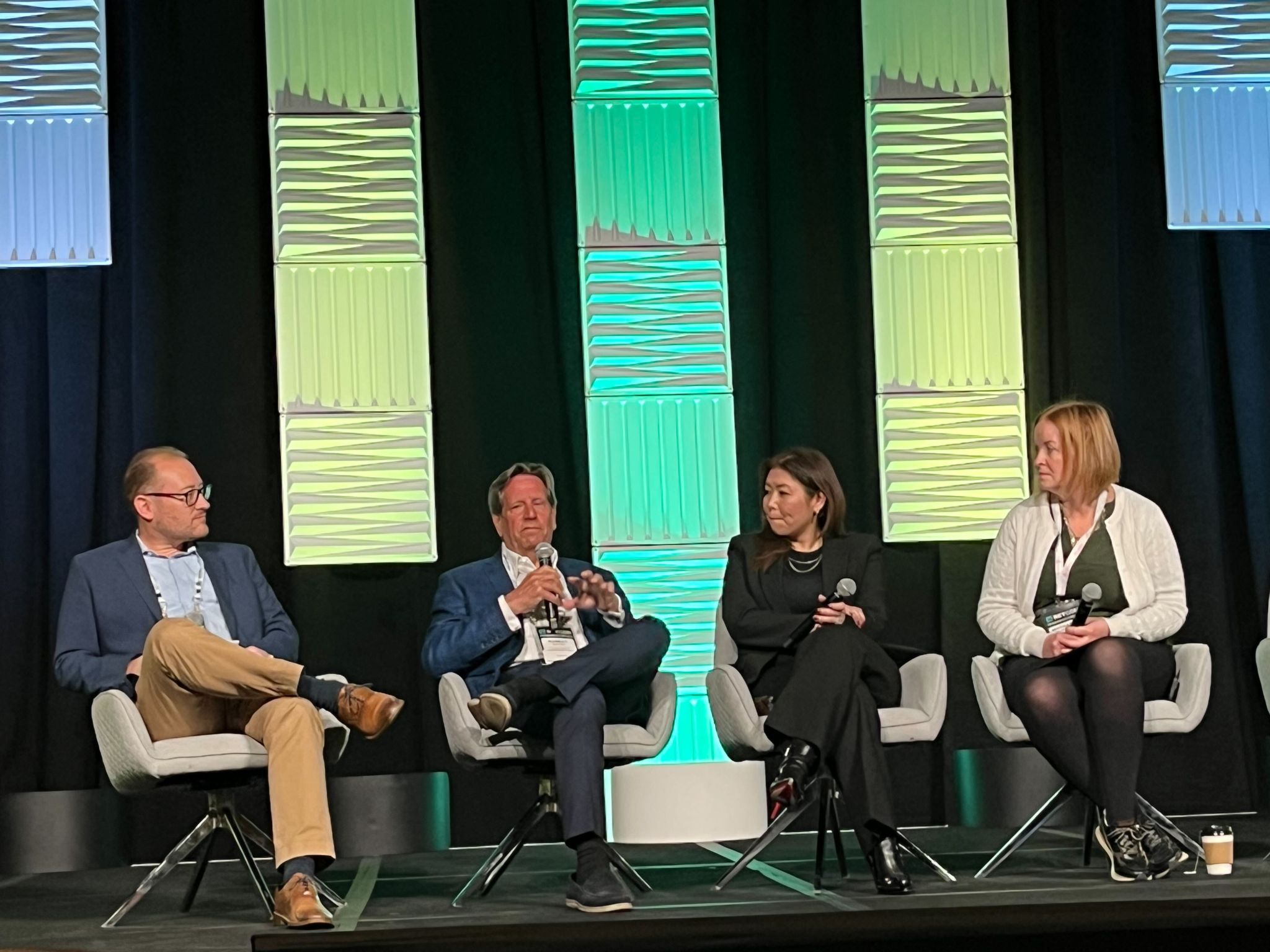
Who’s in the Cherre Room
Three years of Cherre-hosted rooms. The people inside them.
How Cherre operates between the rooms
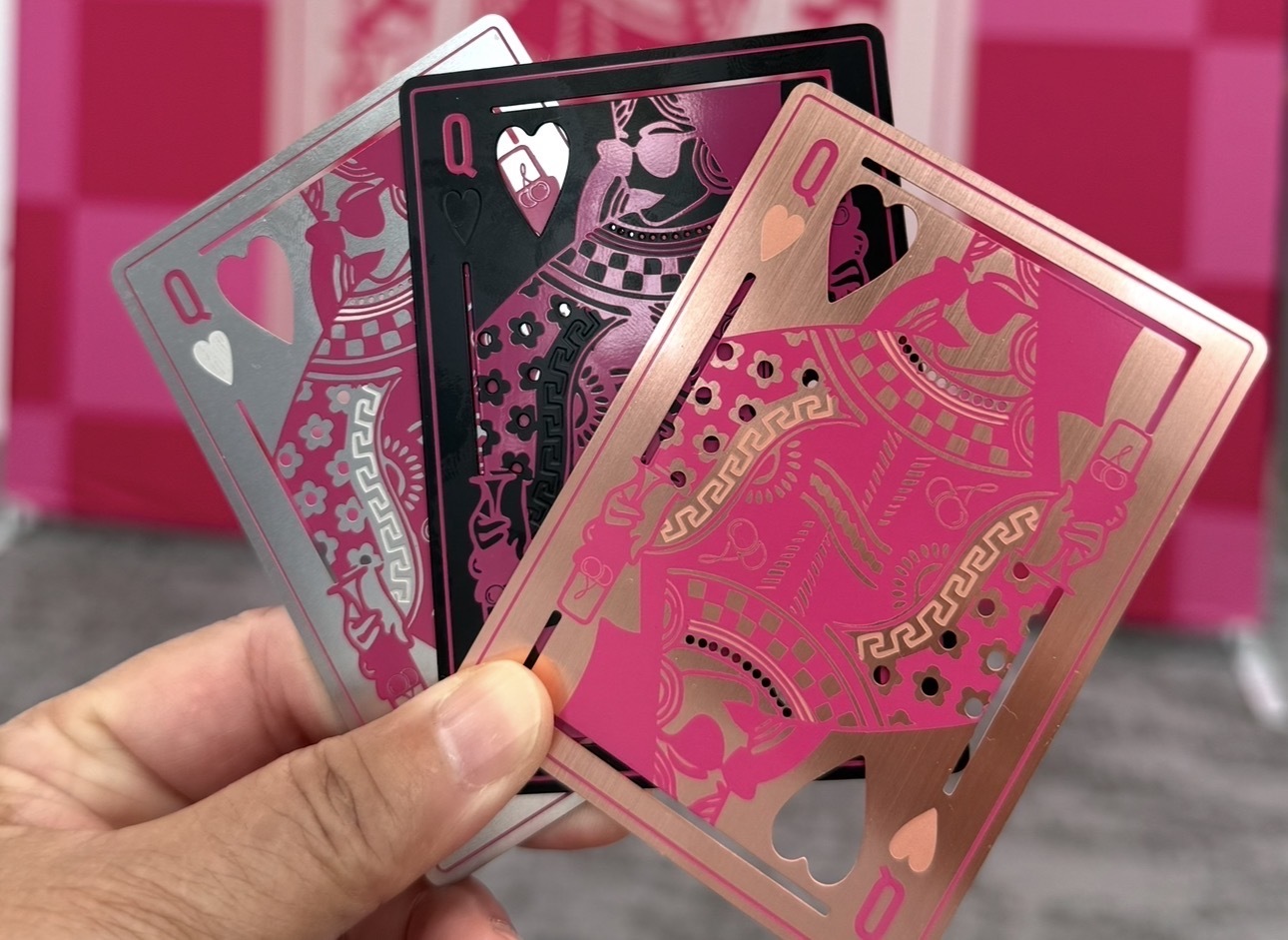
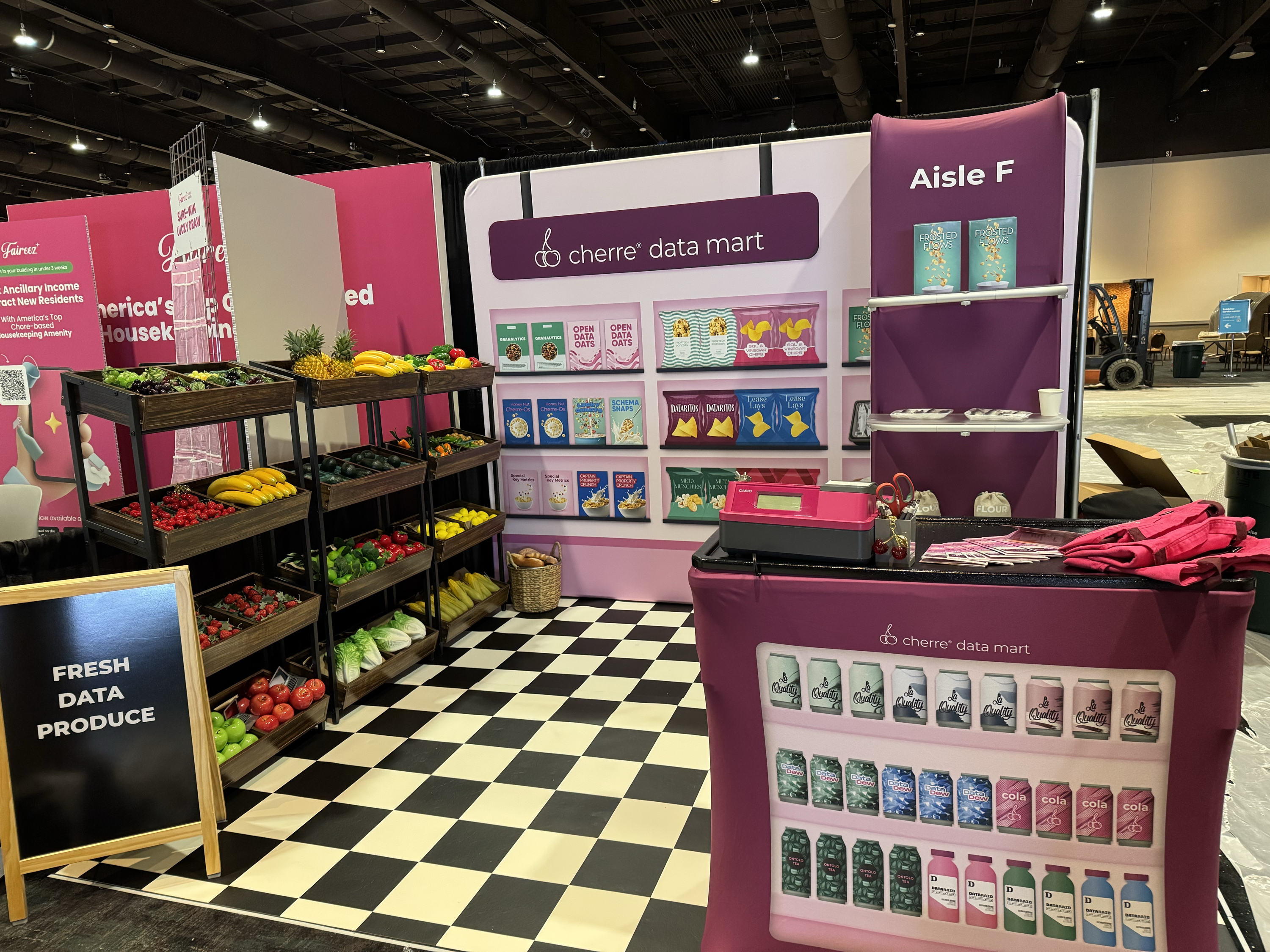
Cherre’s GTM is not a calendar of conferences. It is a year-long serialized program where each event compounds the last. The three activations below were executed by Cherre’s commercial team and demonstrate the operating discipline behind the convening capability: a year-long collectible campaign, an immersive product universe, a launch tied to a flagship product release. This is what scaled coordination across product, brand, and field looks like.
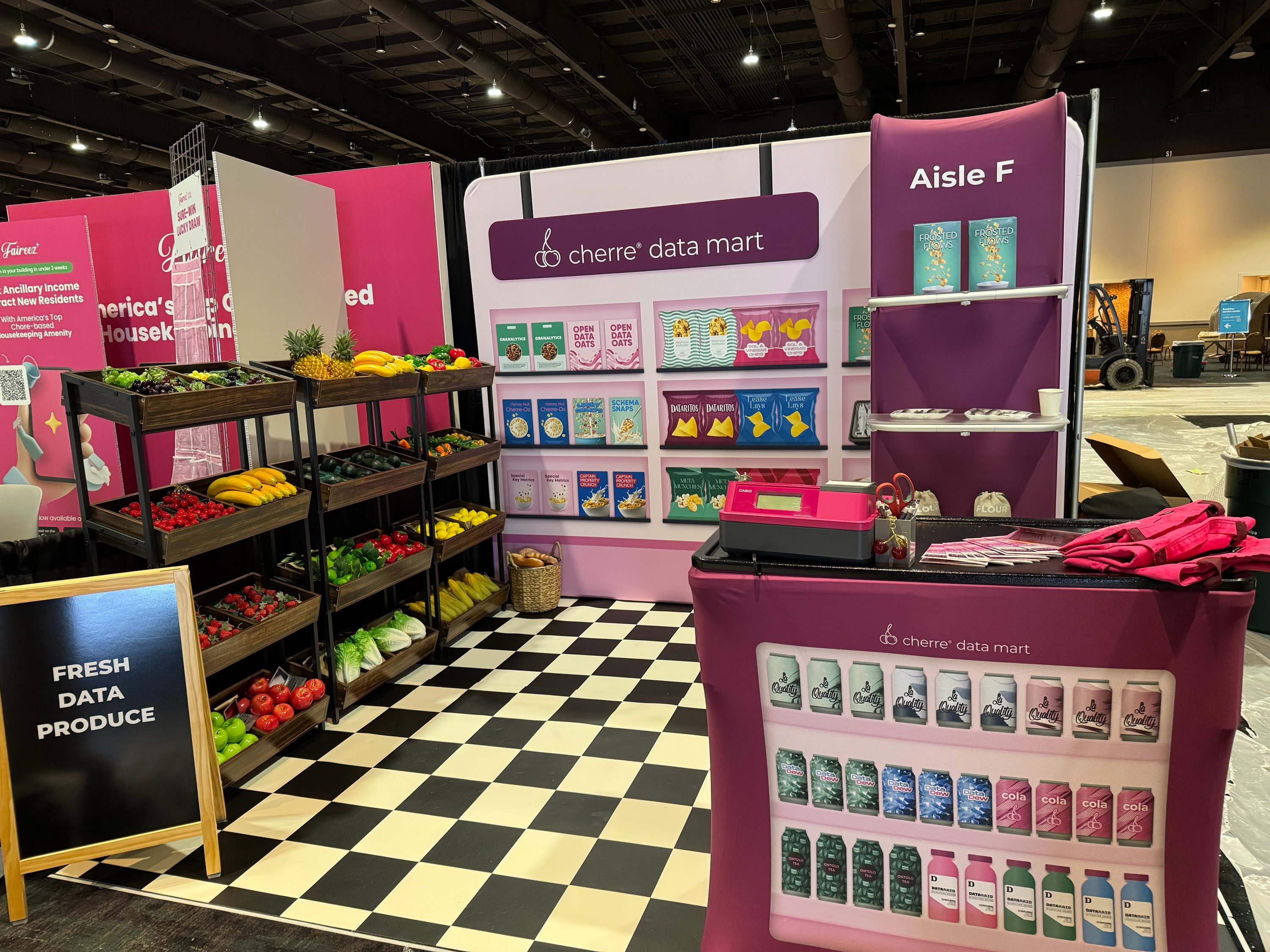

Lineage, Legacy, Consistency
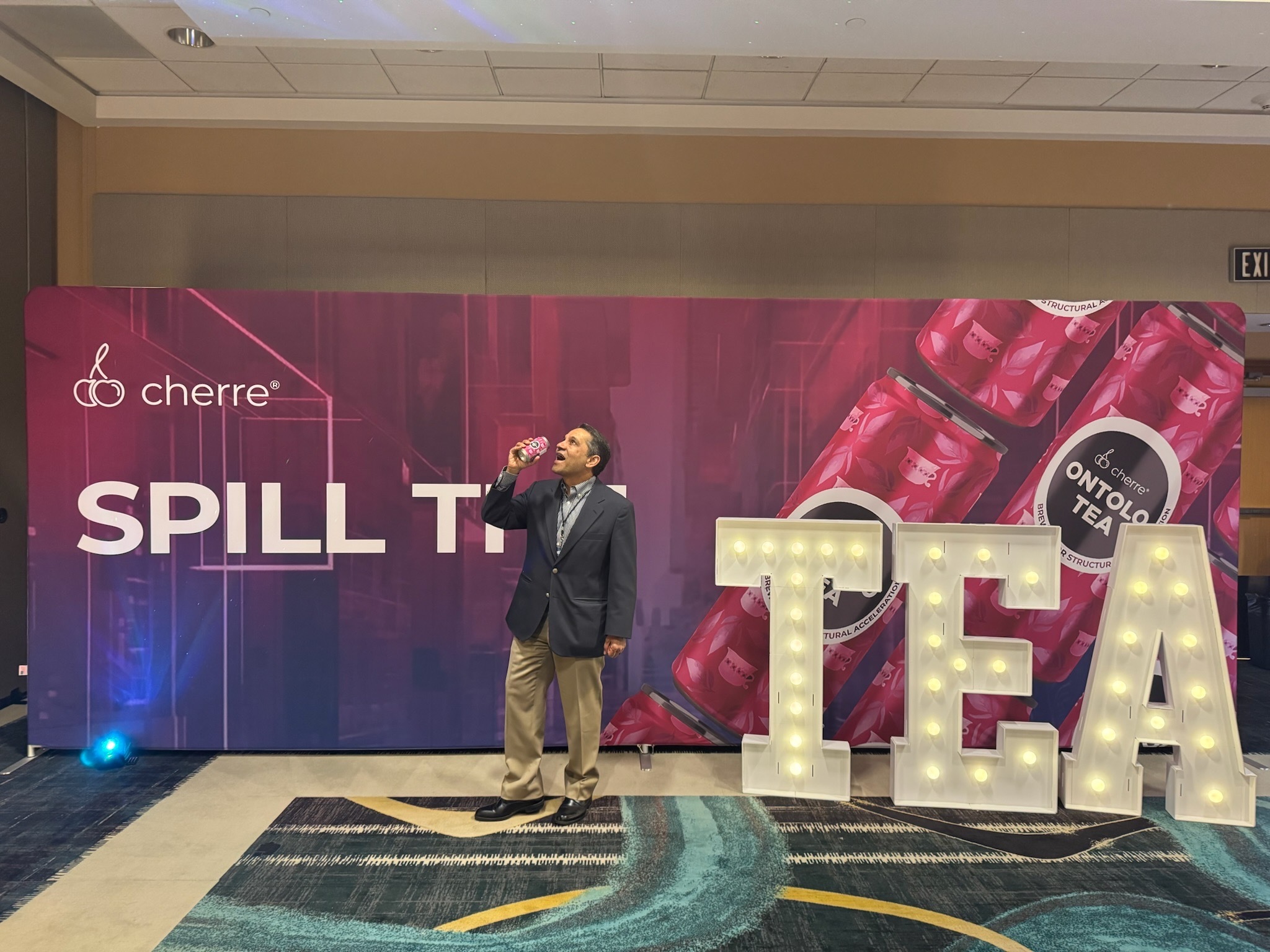
Every activation was designed around a three-part philosophy: Lineage — executive visibility that earns the stage; Legacy — experiences that outlast the event; and Consistency — showing up with presence year after year. Click into each event to see the story in frame.

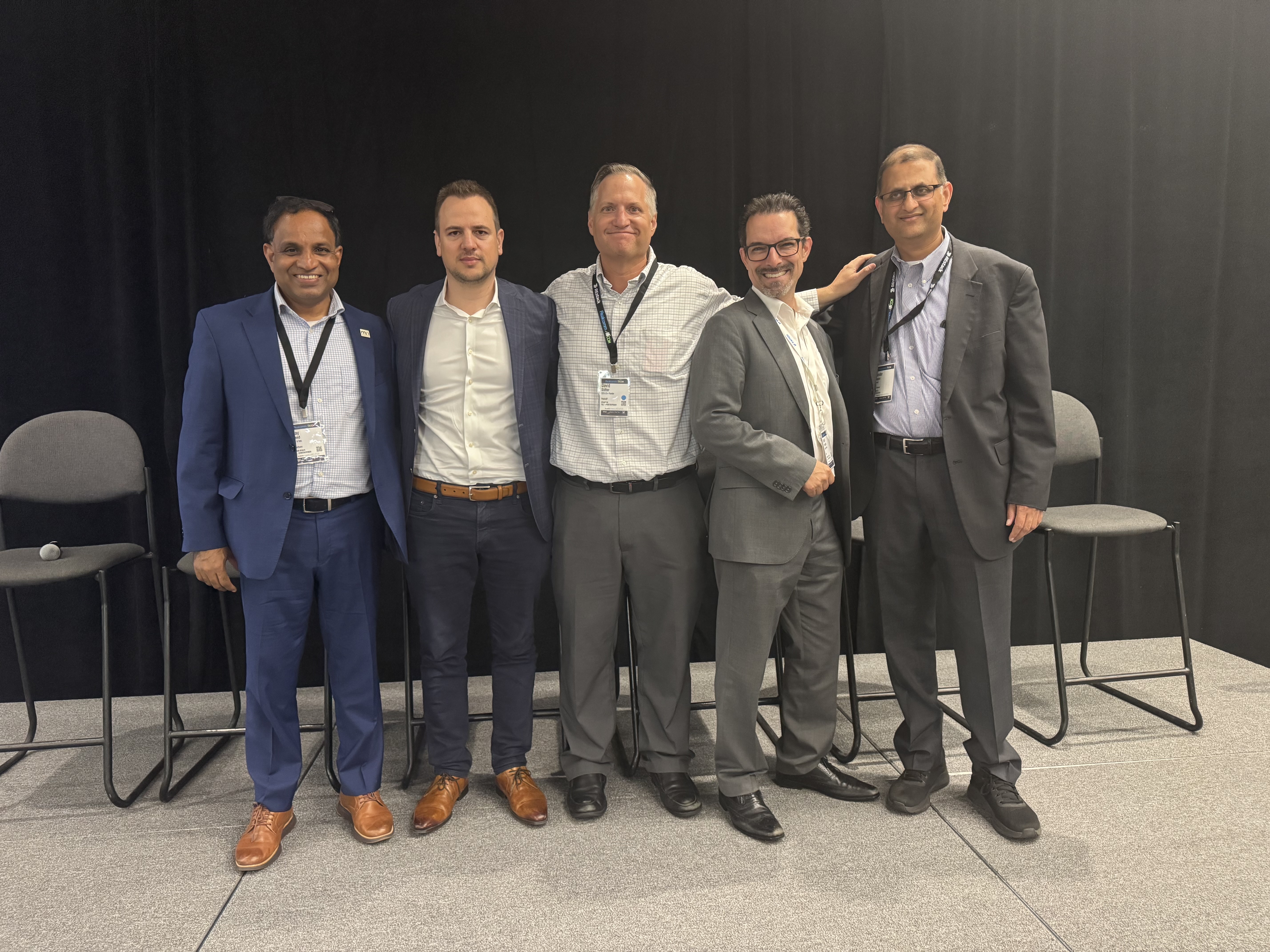
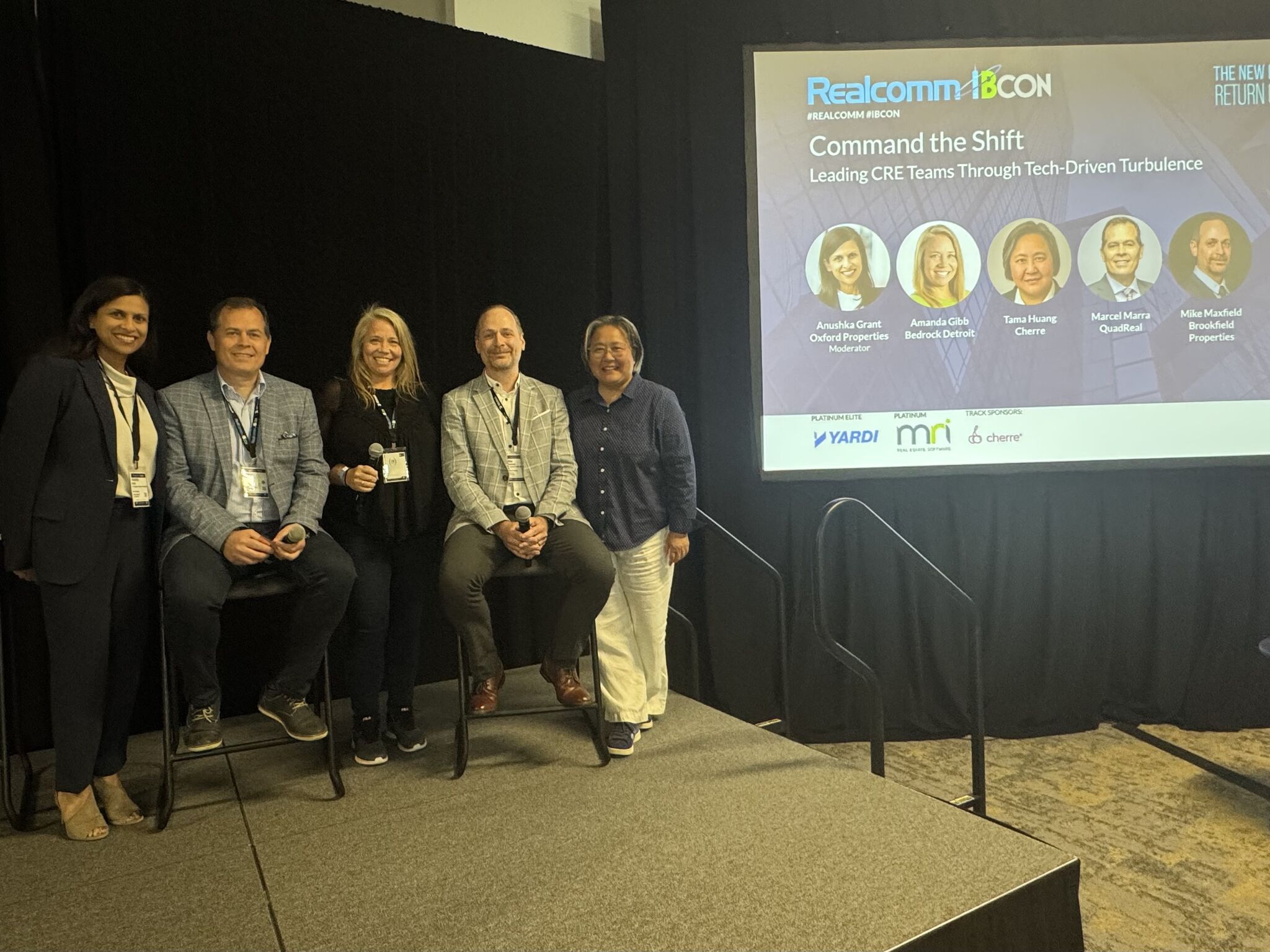
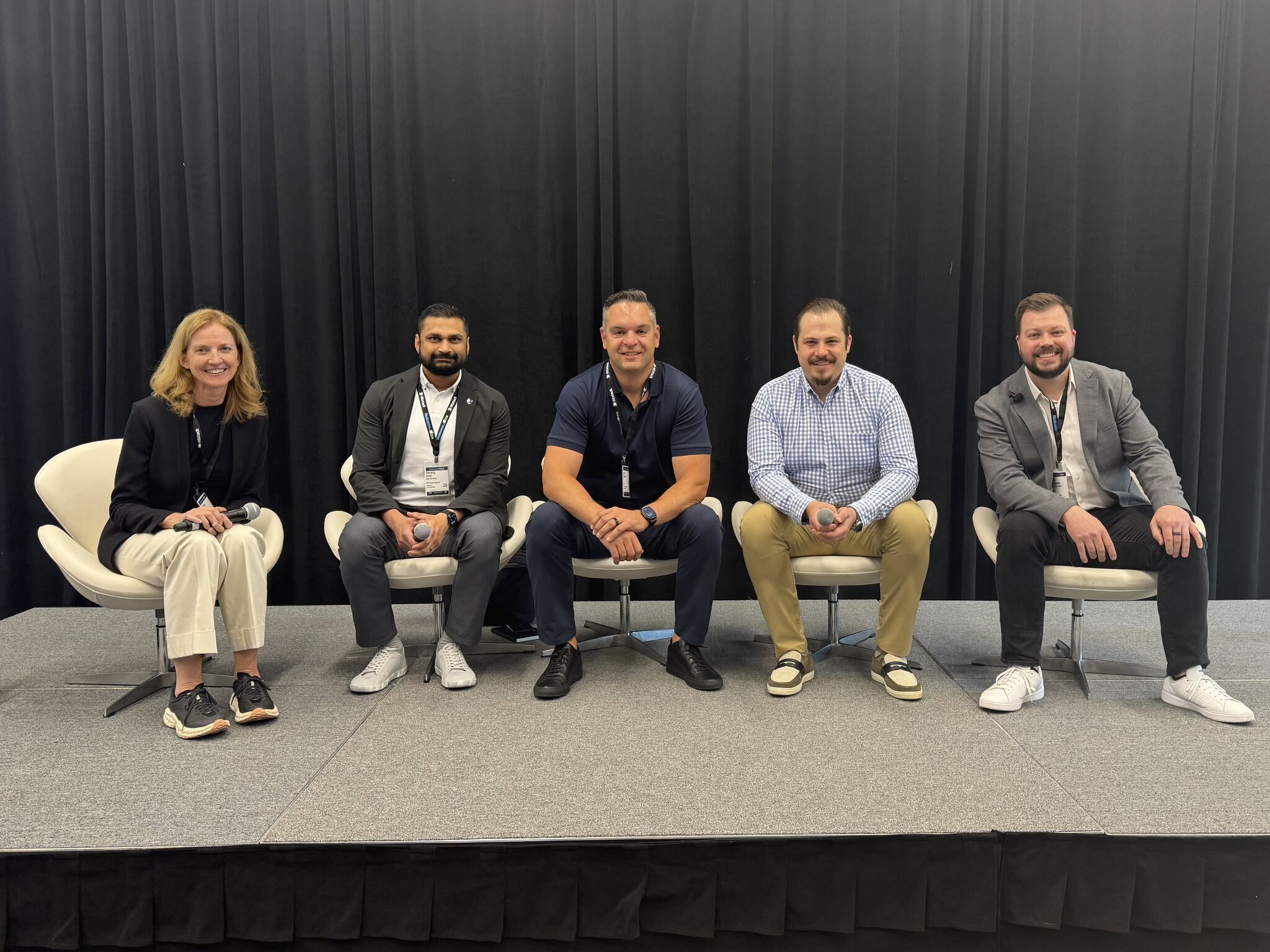


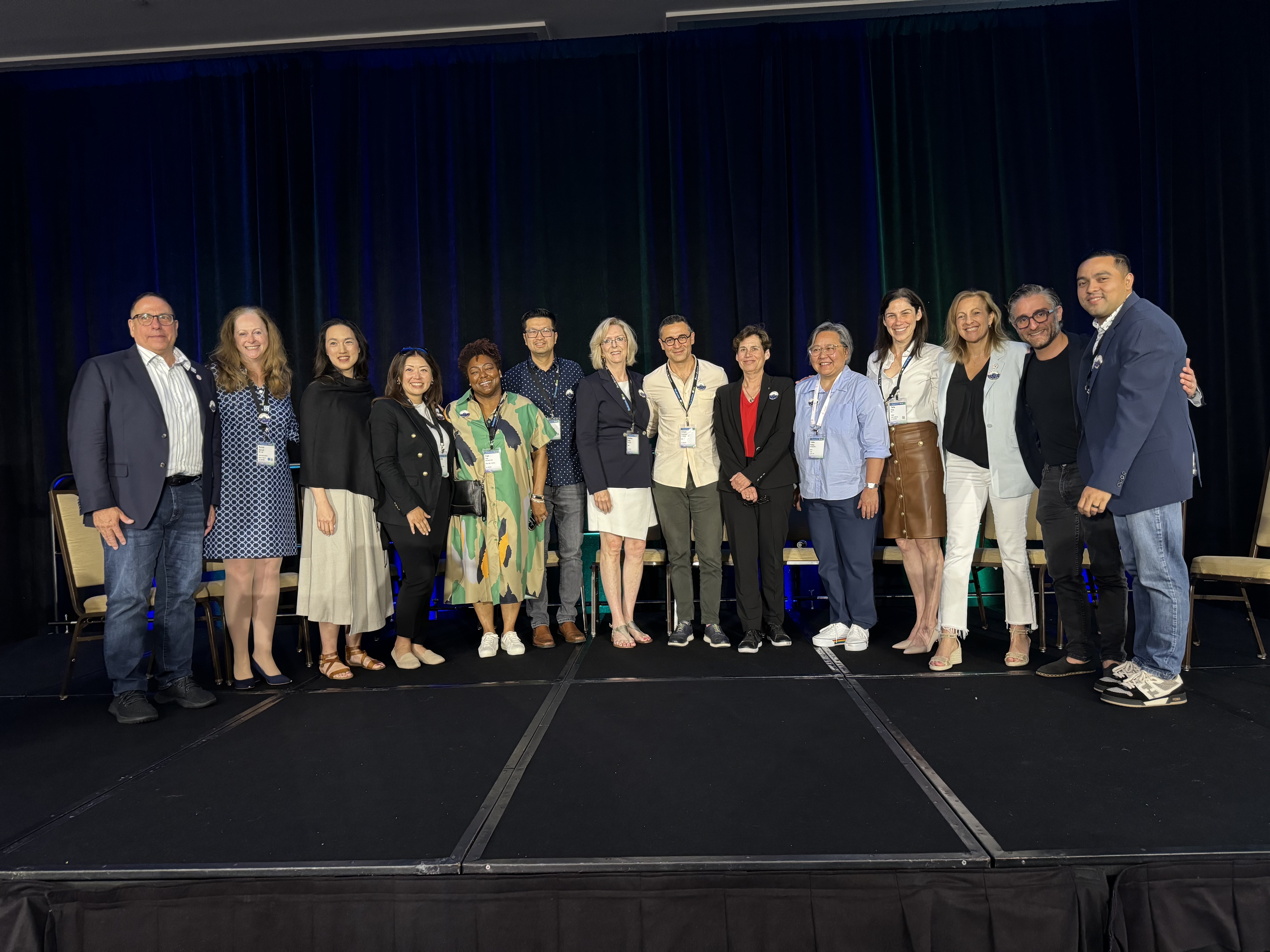
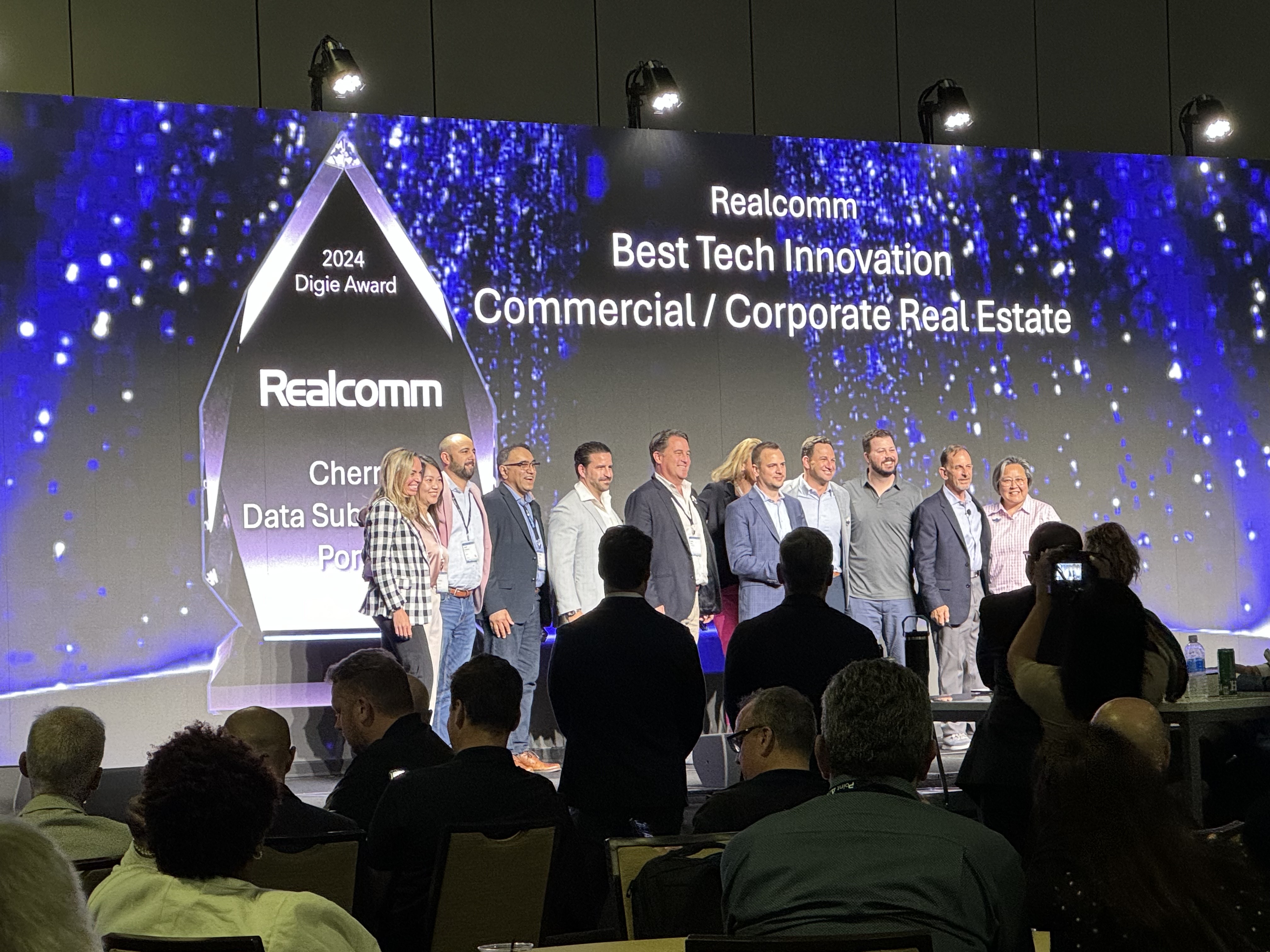

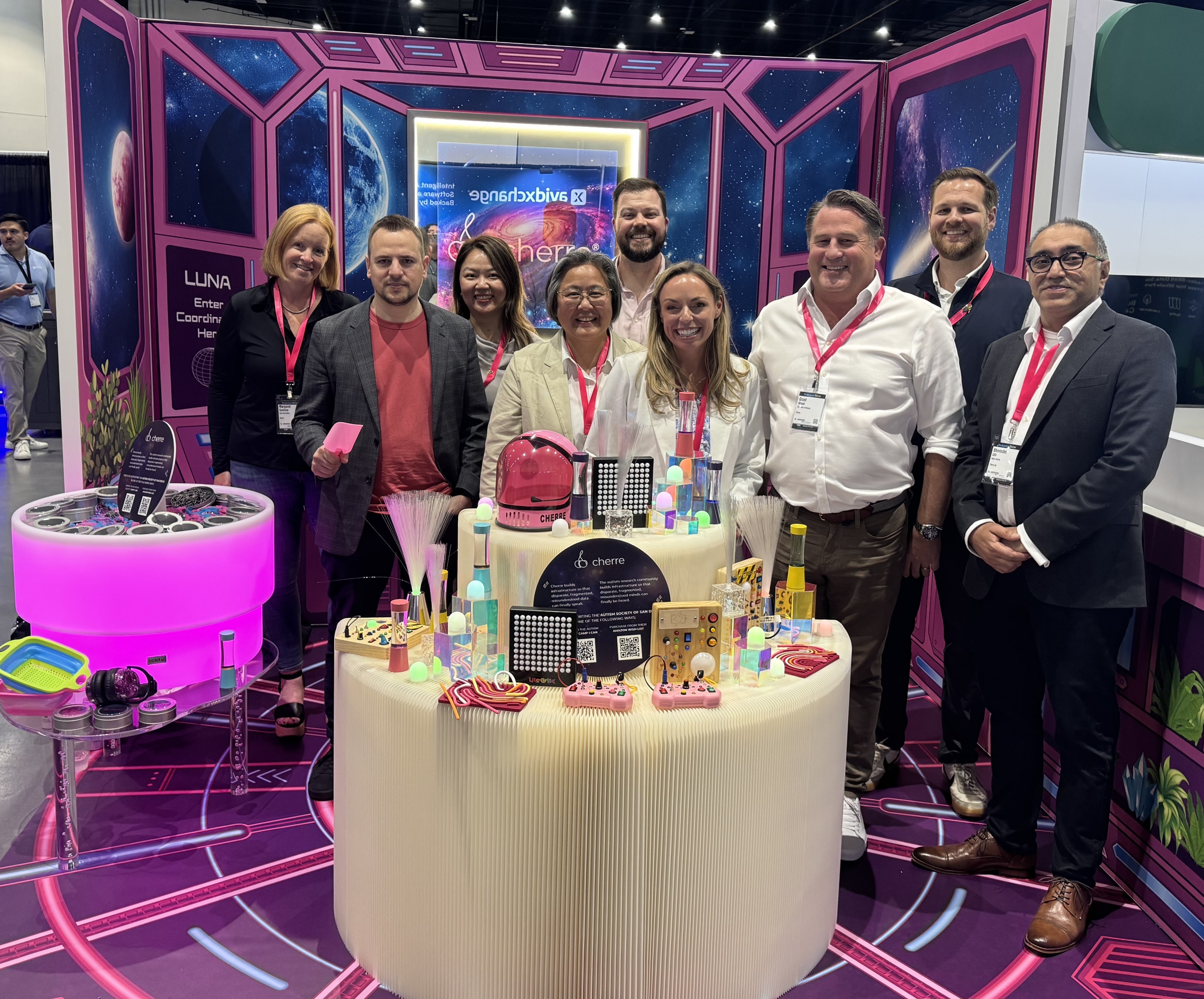
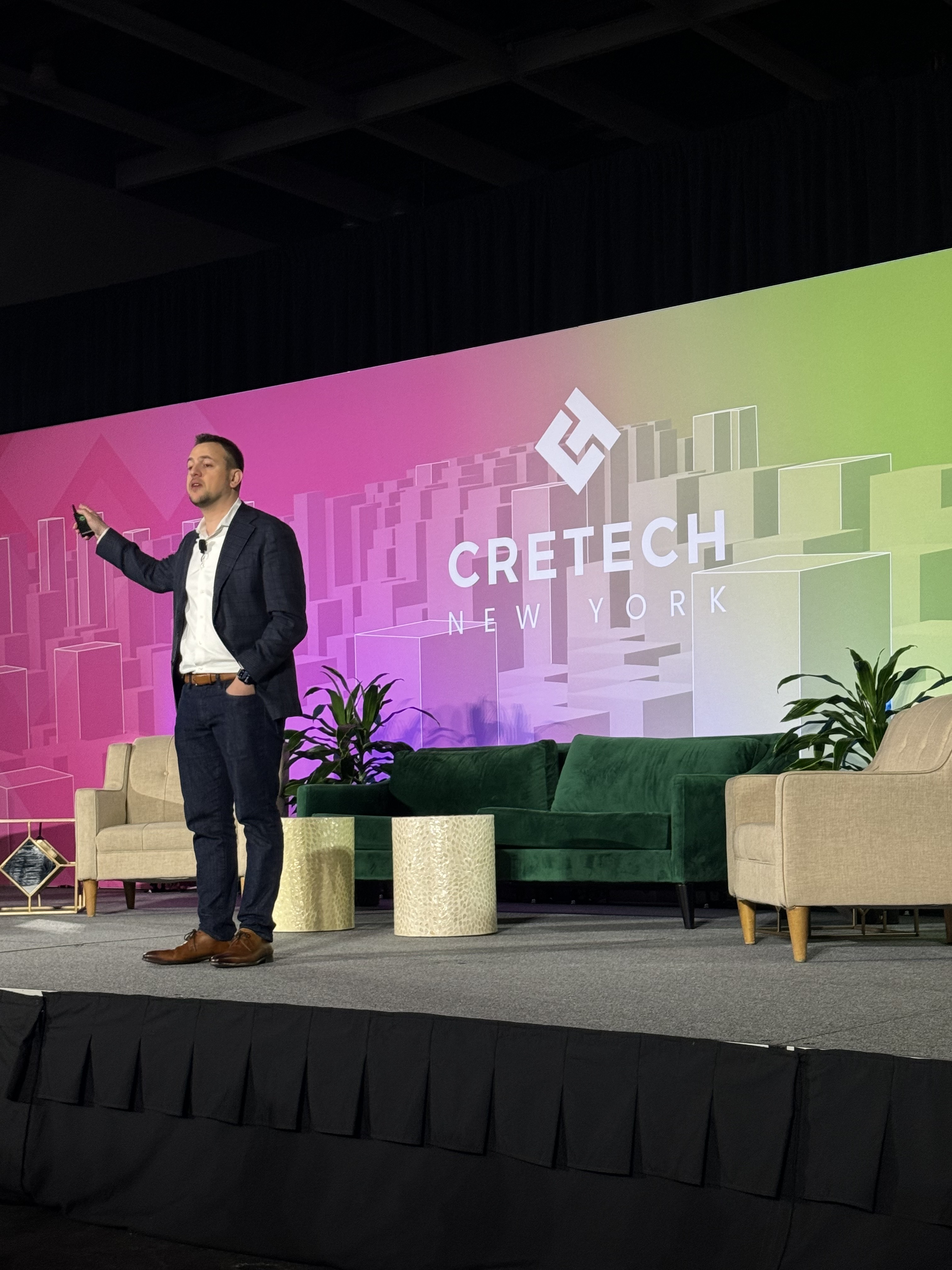



Most enterprise software companies have a brand. Few have a commercial position. Cherre has both.
The position is not abstract. It is the reason the meeting rooms fill, the receptions sell out, the same senior buyers keep coming back, and successors join the conversation when they are promoted. The evidence in this deck is the receipt. The receipt is also, in another reading, the verdict.
Cherre coming into RealPage is not a customer list. It is a commercial position in institutional real assets, built deliberately over three years on a decade of technical credibility, validated by who keeps showing up, and demonstrated by a pipeline that converts. The motion is built. Scaling it is the work that comes next.
07.2 — Pipeline
What the focus produced.
Three years ago, Cherre committed its product, GTM, and senior leadership to institutional investors and the commercial market. The pipeline below is the output of that focus. Three sellers, against a defined segment of sovereign wealth funds, pension funds, global asset managers, fund administrators, and institutional commercial REITs. The motion is proven. The book is real.
Behind the contract-out and BANT stages sits a Demo pipeline of 82 active deals with $9.5M in qualified ARR, across sovereign wealth funds, pension funds, global asset managers, REITs, and service providers. The funnel is full and the segment is proven.
This is what three sellers built in three years against a freshly focused ICP. The motion is established, the relationships are warm, and the segment is mapped.
07.3 — Revenue Model
The motion is built. RP adds the team to run it at scale.
Three sellers built $15.5M in committed LARR and a $12.8M active pipeline across institutional real estate. GIC — closing this quarter — is a $2.5M ARR contract that puts Cherre in front of 400 GP operators globally. The LP-led initiative with HOOPP and the REDI standard creates a downstream mandate: every manager reporting into a REDI-adopting LP needs a compliant platform. GIC as a reference closes the conversation before it starts. That pipeline is not confined to North America. Savills Investment Management, DWS, ICG, and Partners Enterprise Capital are active in the book. Cherre brings the relationships, product fit, and institutional credibility to open the international market — a segment RealPage has not historically penetrated. The segment is mapped. The relationships are established. The pipeline converts. RP’s contribution is targeted: additional Sales Directors to absorb existing pipeline and build new pipeline from RP’s customer base, plus a new BDR to accelerate top-of-funnel. The ICP is proven. The book is real. Scaling it is the work that comes next.
The model above reflects Cherre’s standalone commercial position. It does not include the incremental opportunity across the RealPage product suite — AIM, RealPage BI, Market Analytics, and Investment Management. Cherre looks forward to modeling that upside collaboratively with the RealPage team.
This is what the Cherre team built before any RP contribution. The $9.5M Demo pipeline across 82 named institutional deals sits above this as further upside — not counted in either scenario. The international accounts are not modeled separately; they are active in the existing pipeline and represent an expansion surface that RP has not historically had access to.
Conservative model. $394K above the $17M target. Moderate scenario reaches $19.1M.
The vectors set the strategy. The stack is what the strategy has to install underneath. For thirty years the data layer of institutional capital was built around one consumer, the human reading a report. The reporting stack worked because the human did the integrating, interpreting, contextualizing, and remembering, invisibly, every time. The agentic stack does not have a human in that position. The cognitive work that always existed becomes a set of codified layers.
Build the foundation codified layers (03 to 07) once, as shared infrastructure reused across clients; build only the reasoning surface (08) per engagement. CORA participation, the industry coordination of that shared layer, is a Phase 01 gate.
From the reporting stack to the agentic stack
Systems of record do not change. Storage does not change. The consumption layer does not change in role. Its consumer does. What gets added are the layers that make explicit the cognitive work the human used to perform invisibly. Three classes carry through the stack: Persistent, what survives unchanged from the reporting era; Transformed, mechanical transport shed of the semantic arbitration that used to hide inside ETL; and Codified, what the human used to do invisibly, now made explicit because the agent has no head.
Read top-down: the consumer is layer 09; systems of record are layer 01. Click any row for the gap today and what is still missing at scale. The badge on each row carries two lenses: the architectural class and the product line that owns it. CONNECT owns layer 02 across three flows in: Submissions, Pipelines, Market Data. Layers 01 and 09 are client-owned.
Persistent 09 Action surface +
Was "Consumption." Same layer; the consumer expands from human to human + agent.
Consumers are display-shaped. Architecture assumes a human reading a chart; agents need graph traversal, semantic queries, lineage retrieval.
·
Codified · ALPHA 08 Reasoning surface +
Was implicit. The human composed across entity, relationship, definition, context, and memory to produce reasoning.
AI is bolted on. Models wrap around the dashboard. They see the outputs the human reads, not the foundation that produced them.
A reasoning surface agents can rely on. A stable interface that survives schema, vendor, and platform churn downstream.
Codified · ALPHA 07 Decision graph +
Was implicit. The human remembered what was decided last quarter and why it made sense.
No decision lineage. Approvals, overrides, sign-offs live in emails, chat, IC minutes. None of it structured or queryable.
A decision layer that is queryable. Capturing decisions as events with standard schemas is tractable. The reason it isn't solved is not technical. Operational and political.
Codified · ALPHA 06 Context graph +
Was implicit. The human held situational context: what was active when this happened, what definition was in force.
Context is reconstructed at query time. No native operation joins knowledge, events, and semantics; the work falls to whichever consumer asks the question.
A context graph that operates at population scale. Each firm's context graph stops at the firm's walls. The institutional memory worth having extends beyond any single firm.
Codified · Data Services 05 Semantic layer +
Was scattered. Definitions lived in modeling code, BI tools, analyst heads, IC memos.
Semantic logic is scattered and unversioned. Same metric, multiple implementations. A definition active a year ago is not retrievable today.
A semantic registry that survives versioning. Today's semantic layers do not survive across tools, let alone across firms.
Codified · Data Services 04 Knowledge graph +
Was the human's mental picture of how entities related.
The data is not graph-shaped. Real estate is a graph (entities and relationships) stored as tables. Multi-hop reasoning becomes expensive joins.
A canonical graph the industry agrees on. Each firm models its own; the graph of real estate itself does not exist at population scale.
Codified · Data Services 03 Entity resolution +
Was implicit. The human reconciled "this building" across sources at query time.
No persistent canonical identity. Entity resolution happens at the BI or modeling layer, ad hoc, query by query. The same property has multiple IDs.
A canonical identity layer every consumer trusts. Each firm builds its own, often poorly. No shared canonical layer exists at population scale.
Transformed · CONNECT 02c Market Data +
Curated public and licensed feeds: comps, demographics, property records, market signals. Pre-resolved against client portfolio entities before they hit the foundation.
Industry buys market data and runs entity matching at query time, every time. Pre-resolution at the ingest layer collapses query-time work and produces consistent answers across consumers.
Public and licensed feeds joined to portfolio entities as a continuous service, not a project. The combined entity inherits this from Cherre.
Transformed · CONNECT 02b Pipelines +
Direct connectors to ERP, deal management, leasing platforms, and warehouses. Pre-built integrations across the leading systems of record in real assets.
Every client builds and maintains its own connectors. The connector library is the cost the industry pays repeatedly because no one consolidates it.
Connector library as a managed asset, not a project deliverable. The integration cost compounds in favor of the firm that runs it once for the industry.
Transformed · CONNECT 02a Submissions +
Operating-partner and third-party data collection. Map sources, define rules, automate ingestion, standardization, and validation.
Submission flows run through email, FTP, and spreadsheet templates. State changes are overwrites. The audit trail is "what was the value at month-end snapshot," not "what happened, when, why, in what order."
Schema-validated, append-only ingestion with row-level provenance. The layer as a contract surface, not a connector library.
Persistent 01 Systems of record +
Unchanged. Property management, fund accounting, valuation systems. The authoritative ledger for transactions in both eras.
·
·
The deployment question (what gets built inside the firm, what gets consumed from the shared canonical layer, and the one layer that sits locally but depends on the canonical layer beneath) is answered in Section 11 Delivery, where the nine layers collapse into three deployment buckets.
Three products across three commercial models. Each serves a different point on the client maturity curve and generates a different type of revenue: recurring SaaS, data-as-a-service, and the emerging service-as-software model for agentic AI.
Service-as-software is the unproven model of the three. The Platform Value Office owns ALPHA pricing and packaging, defined in Phase 01 before the first FDE engagement is scoped. SaaS and data-as-a-service keep their existing motions.
CONNECT
The data-in surface for the combined entity: three flows that land in a single governed foundation. Submissions, Pipelines, and Market Data are the inputs CORE resolves and ALPHA reasons against. Priced as recurring SaaS; the foundation on which CORE and ALPHA sit.
CORE
The foundation beneath the platform. CORE resolves entities (Luna), governs the knowledge graph (Meridian), and maintains the semantic layer. It sustains data quality over time across operating partner changes, new sources, and evolving schema. Priced as a managed service contract; high retention, high-margin recurring revenue. In production, CORE is sustained by the Data Services Support function (Delivery Functions, Section 13).
ALPHA
The combined entity's reasoning surface, where agents reason, decide, and act on operational truth, delivered as outcomes rather than software seats. Three components inside one product line: Agent STUDIO and ATLAS as the agent platform; the MCP server as governed context delivery to any model; FDE-led activations as the engagements that put agents in production. Forward Deployed Engineers are the delivery team. Value is measured in outcomes delivered, not seats sold.
Product ladder, the land-and-expand model
| Stage | Product | Value delivered | Expansion trigger |
|---|---|---|---|
| Land | CONNECT | Reliable data pipeline from operating partners; single source of truth for fund data | Data volume grows or operating partner base expands. CORE conversation opens |
| Expand 1 | CORE | Data quality sustained at scale without internal headcount burden on the client | Client asks "what can we do with this data?" AI readiness signal is live |
| Expand 2 | ALPHA | AI agents producing portfolio analytics, investor reporting automation, anomaly detection | Agent outputs drive new use cases; cross-sell into adjacent data domains or asset classes |
| Optimize | FDE Ongoing | Continuous optimization of agents, new use case delivery, co-development on emerging capabilities | Sustained partnership. FDE embedded in client data and AI roadmap; highest retention |
Three workstreams across two delivery windows. Deliverables and the client outcomes they unlock are paired within each window, so the value side of every shipment is legible alongside the shipment itself.
Agentic Cherre 1.0 ships entirely in the first window as a complementary interim layer. Bedrock and DSP (Data Submission Portal) both span both windows, with infrastructure and foundation work landing first and agentic capability landing second. Each window's deliverables sit beside the client outcome they produce.
Timeline, workstream by window with outcomes
Agentic Cherre 1.0 ships entirely in the first window. Bedrock and DSP both span both windows. Each window's deliverables sit beside the client outcome they produce.
MCP
- Auth & Provisioning
- Performance Tuning
- Connector DIM Acceleration
- OOTB MCP Skills
- Dashboards by Persona & Asset Class (Financial Reporting, AM, PM)
- Data Quality & Observability
- Compliance
Partners, LPs, GPs, and Cherre clients (existing and new) access their Cherre data (Connector, Submission, 3rd Party) through Cherre MCP, delivered with prepackaged skills for persona-specific tools: Financial Reporting, Asset & Portfolio Management, Market Analytics, Chatbot, Connector & DSP Quality & Observability, and Compliance.
Complementary interim agentic solution for numerous Cherre personas, serving as an additive output for DSP and Connectors clients while Agentic Cherre 2.0 is built out.
Migrate & Harden — to cherreco/sakura
- Port the bedrock prototype to the cherreco/sakura repo
- Engineering code validation & review
- Security, auth & provisioning
- Cherre UI theme & design system
Infrastructure
- Semantic Layer Hardening & Productization
- Meridian Hardening
- Luna Hardening
Bedrock MVP — productize existing services in unified UI
- Onboarding Tooling
- Connectors
- Luna
- Meridian
- Ontology Studio / Semantic Layer Onboarding
- Data Workbench
Operate & Analyze
- Home, Funds, Portfolios, Assets dashboards
- Watch Lists & alerting
- Search — map-based property discovery
- Operations & Lineage observability
Data Quality & Governance
- Conflict Resolution & Review Queue
- DQ Rules (library, text-to-SQL, manual SQL)
- Business Validation Rules
- Anomaly Detection
- Source Ranking / golden record
Administration
- Org config, Users, Credentials & API keys
- Credits & Usage, Audit Timeline, Time-Travel Replay
- Webhooks, Alerts & Notifications
Every deliverable in this lane is a migration, not net-new invention: the bedrock prototype is ported to cherreco/sakura, validated by engineering, secured and provisioned, and re-themed to the Cherre design system. On that production base:
RealPage and any Cherre client can access their Cherre data via the Bedrock UI, connect it to the knowledge graph, define their semantic layers, and detect and resolve data anomalies and drift.
Cleansed data egresses to downstream systems, or is accessed via Cherre MCP for agentic use cases with the persona-ready skills above.
Beyond ingestion, the same UI surfaces day-to-day operation and governance — fund / portfolio / asset dashboards, map-based search, watch lists, data-quality rules and anomaly detection — plus administration (credits, audit, time-travel replay, webhooks, users).
Agents
- Agent Creation on governed semantic infrastructure
- Agent Library
- Tool vs Judgement Agents
- Approval Workflow
Dashboards
- Pre-Canned Dashboard Templates by Persona / Jobs to Be Done / Data Domain
- Dashboard Build & Save Chatbot
- Metric aggregation & rollup rules (unit → property → portfolio)
Janus
- Ideas, Hypothesis, Backtester, Signals, Triggers
Conversational & MCP
- ATLAS Chat — plan mode, source citations
- MCP Server Registry — governed tool exposure
Agent Studio — n8n → GE Agent Platform
- Migrate agents from self-hosted n8n to managed Vertex Agent Engine (ADK)
- Describe-to-build — create agents in chat, no orchestration canvas
- Managed RAG & grounding over Gold-layer data (Vertex AI Search)
- Memory Bank, multi-agent (A2A) & governed MCP context to any model
- System-enforced Bronze → Silver → Gold gates + decision graph
- Eval-gated promotion; metering parity; n8n sunset
Cross-Tenant (Cherre-internal)
- Multi-Org Compare
- Ontology Harmonize
Cherre clients create persona-based templated dashboards and AI agents, autonomous workflows running on top of a governed semantic infrastructure (knowledge graph, semantic layer, drift detection).
Conversational access (ATLAS chat with plan-mode and source citations) and a governed MCP server registry expose the same canonical layer to agents and external tools.
Agentic Infrastructure
- AI Workspace
- Distinct AI Identity with audit trail
- Standard event stream
- AI-ready actions exposed within role permissions
LP Workflow
- Email Submissions
- LP Roles
- Submission Attachments
- Submission Insights Suite (Historical Performance Analytics, Error Analytics, Provider Scorecard)
Partner Enablement
- Multi-Org Management Tools
- TT Replication
- Self-Service Custom Mapping
- Submission Insights Analytics Suite
Connectors
- DSP PCC for Automated Egress to Preconfigured Destinations (Amazon S3, SFTP, etc.)
LPs gain a production submission gate with multi-tier hierarchies, entity-resolved egress, and a workflow built for their actual portfolio structure.
Fund admins and consulting partners self-onboard new clients without engineering tickets, and benchmark provider performance with submission analytics that didn't exist before.
Cherre developers build the infrastructure for DSP agentification in the following quarters.
6 Highest-Value AI Assistants
- Mapping Cleanup
- Pre-Reviewer
- Validation Rule Author
- Pattern Watcher
- Workflow Steward
- Submission Co-Pilot
AI Platform & Embedded DSP
- Headless submission endpoints
- Embeddable Workflow Components
- ISVs and CRE platforms run DSP under their brand
The same audit-traced platform ships six AI assistants that compress days of manual mapping, validation authoring, and reviewer work into minutes, without changing any data model the client has already configured.
Fund admins and software platforms resell DSP under their own brand through multi-org management, white-label submission pages, and API endpoints, extending DSP's reach far beyond Cherre's direct sales motion.
Three delivery functions, each mapped to a product. The Onboarding team deploys CONNECT. The Support team sustains CORE. FDEs deliver ALPHA. The Medallion data architecture, Bronze, Silver, Gold, is the shared development methodology that underpins all three functions.
The Onboarding Team is built from Cherre's existing CONNECT deployment muscle plus RealPage's implementation team; the Data Services Support Team is stood up new under unified CX leadership; FDE is hired against a defined pod profile.
Onboarding Team
Responsible for technical implementation of CONNECT: data source discovery, connector setup, schema mapping, validation rule configuration, and go-live. Onboarding velocity, time from contract signature to first live data, is the primary metric. Playbooks are standardized globally; client-specific configuration is documented and handed to Data Services on go-live.
Support Team
Manages ongoing data quality, pipeline reliability, and issue resolution for Data Services clients. This is not a helpdesk. It is a managed service organization accountable to data quality SLAs. It handles operating partner data changes, schema drift, new source onboarding within existing contracts, and platform-level escalations to CONNECT engineering. The post-close Data Services practice runs as a managed delivery portfolio. RealPage's owned delivery centers in India and the Philippines carry predictable, repeatable workloads at managed cost. Cherre's existing Data Services partner network covers surge capacity, regional reach, and specialty workloads where owned playbooks have not yet been built or do not economically scale. Both modalities are strategic assets; the mix is actively managed.
Forward Deployed Engineers
FDEs design, build, and optimize AI agents for clients. They begin with a readiness assessment (is the client's data ready?), move to use case design (what should the agent do and why?), then build and deployment. Post-deployment, FDEs optimize agent performance and identify the next use case. The product and the practice are the same thing: outcomes delivered by Forward Deployed Engineers running causal, comparative, predictive, and diagnostic reasoning against the Data Services foundation.
Why FDE-shaped delivery, not Center of Excellence
A Center of Excellence holds capability centrally and routes domain requests up for review before outputs return to the field. The model scales for reporting-era outputs, where review cadence is weekly and approval latency is measured in business days. Agentic outputs are continuous. Approval chains become latency. The reviewing center becomes the bottleneck the agent was supposed to eliminate. FDE-shaped delivery keeps domain expertise and AI capability in the same accountable unit. Pods carry the governing principles into the engagement. Authority sits at the unit doing the work. The decision-maker receives governed outputs without the relay.
Approval chains were a feature in the reporting era. They are a bottleneck in the reasoning era.
The model has institutional precedent. Palantir's Forward Deployed Engineer practice scales by pod, not by hierarchy. McKinsey's QuantumBlack operates as embedded teams with platform-side principals, not as a center of excellence routing through a partnership. The argument is not that FDE is new; it is that the existing CoE-shaped CX functions inside both Cherre and RealPage need restructuring before they meet agentic delivery at scale.
Capability model, who owns what
| Capability | Onboarding Team | Data Services Support Team | FDE |
|---|---|---|---|
| Data source discovery & schema mapping | Owns | New sources in-contract | Complex / novel schemas |
| Connector setup & pipeline configuration | Owns | Maintains post-go-live | Custom / bespoke integrations |
| Ongoing data quality & SLA management | Hands off at go-live | Owns | – |
| AI readiness assessment | – | – | Owns |
| Agent design, build & deployment | – | – | Owns |
| Agent optimization & new use case expansion | – | – | Owns |
| Client technical training & enablement | CONNECT-level | Data Services-level | FDE-level |
| Platform bug escalation to product engineering | Escalates | Escalates | Escalates + provides field context |
Build, buy, or consume: the architectural layers
The in-house vs. partner question is sharper at the layer level than at the function level. Some layers each enterprise has to run for itself. Some are candidates for shared industry-level infrastructure, because the value of each scales with the number of participants. One layer sits locally but depends on the layers below being stable. This is the framework the combined entity uses to answer the audience's question about which services stay in-house and what in-house actually looks like.
Operated inside the firm
Firm-specific operating models, security perimeters, and consumer surfaces. Each client owns them. RealPage owns at the operator side; Cherre owns at the institutional side. The post-close question is consolidation and standards, not provenance.
Shared infrastructure
Value scales with the number of participants. A canonical identity layer with one institution's data is worth less than one with many. This is the layer the combined entity operates for the industry. CORA codifies the coordination; the platform implements it.
The reasoning surface
Each client deploys agents against their own use cases, but those agents query a stable model-context surface that abstracts them from underlying schema and vendor changes. FDE-shaped delivery is what makes this layer reliable across clients without bespoke point-to-point integration.
The nine layers, mapped to the three buckets
The architecture defined in Section 08 collapses here into a deployment decision. Each row is one layer of the stack; the bucket column names where the combined entity operates it: built or bought inside the firm, consumed from the shared canonical layer, or sitting locally but depending on the canonical layer beneath.
| # | Layer | Class | Bucket |
|---|---|---|---|
| 09 | Action surface (consumption) | Persistent · consumer expands to human + agent | Enterprise · build or buy |
| 08 | Reasoning surface | Codified · ALPHA | Local but dependent |
| 07 | Decision graph | Codified · ALPHA | Industry · consume |
| 06 | Context graph | Codified · ALPHA | Industry · consume |
| 05 | Semantic layer | Codified · Data Services | Industry · consume |
| 04 | Knowledge graph | Codified · Data Services | Industry · consume |
| 03 | Entity resolution | Codified · Data Services | Industry · consume |
| 02 | Ingestion + submission | Transformed · CONNECT | Enterprise · build or buy |
| 01 | Systems of record | Persistent | Enterprise · build or buy |
Medallion architecture, the shared development methodology
The Medallion architecture defines how data is ingested, validated, and made ready for AI, in three enforced layers. Every client deployment follows this pattern, which ensures data quality gates are met before AI agents operate on the data. It is the shared methodology across Onboarding, Data Services, and FDE.
From operating partner data to agent consumption, three layers with gates between
No layer is skipped, no gate is bypassed. Bronze is what CONNECT delivers at go-live. Silver is what Data Services sustains under SLA. Gold is what FDEs build agents against. Each function's quality gate is the next function's entry condition.
- Operating partner data ingested as-is; no transformation at point of entry
- All source formats supported: structured, semi-structured, document
- Full audit trail maintained from source to destination from day one
- Schema discovery and initial data profiling run automatically
- Data lineage tracked continuously; source attribution preserved
- Schema normalization and field mapping to client data model
- Deduplication and entity resolution across operating partners
- Validation rules applied (defined per client by Data Services team)
- Anomaly flagging and exception reporting generated automatically
- Cross-source reconciliation and conflict resolution
- Enriched, analytics-ready data sets available for downstream consumption
- API-consumable for client systems, dashboards, and reporting tools
- Structured for agent consumption: embeddings, retrieval, context packaging
- Portfolio analytics and LP reporting outputs generated at this layer
- FDE-built agent workflows operate exclusively at the Gold layer
Beyond Gold: the decision graph
The Medallion layers serve the data agents reason against. The decision graph is what makes their reasoning auditable. Every meaningful action an agent takes, every approval, every override, every interpretation, every model output, is captured as a queryable event indexed by entity, by actor, by time, and by definition version. This is what reproducibility looks like in implementation. Without it, an agent that produces the right answer cannot prove how it produced the right answer, and the answer fails the audit standard the next era will impose.
The Gold layer makes the agent capable. The decision graph makes the agent accountable.
Delivery model decisions to resolve
- Define the handoff protocol between Onboarding and Data Services: documentation requirements, SLA definitions, and client introduction process must be standardized before the first EMEA hire
- Productize the FDE readiness assessment: fixed scope, defined output format, repeatable methodology across all ICP segments; this is the opening move in every sales cycle
- Determine the staffing ratio between Onboarding, Data Services, and FDE by region and phase. These ratios drive the hiring plan and budget model
- Build Bronze → Silver → Gold quality gate definitions into the CONNECT platform so they are enforced by the system, not by manual process dependent on individual team members
- Define "agent-ready" data specifications per ICP segment. The Gold layer configuration differs between a GP, an LP, and a fund administrator; FDEs and Onboarding must align on this before Phase 02
The Platform Value Office is the combined entity's global services engine: it mobilizes data from operating partners, refines it into governed semantic infrastructure, and activates agents on top, creating value back to the software business across asset classes and geographies. It is led by a Platform Value Office GM with two engine leads beneath, Head of AI + FDE and Head of CX + MDS. This section is how that Office actually runs: the three delivery functions inside, the integration map across them, and the phased hiring sequence.
Three delivery functions inside the Office
Three functions sit inside the Platform Value Office, each contributing services revenue. A fourth function, SaaS Support, sits adjacent: operationally co-located so signals flow into Onboarding, Data Services, and FDE, but funded as software COGS to keep software and services revenue distinct on the buyer's side.
The client lifecycle flow
How signals travel
Inside the same operating team, even when Support's costs sit in software COGS, signals travel by standup, by shared ticket queue, by the same manager asking "what are we seeing this week?" The cost-center boundary doesn't break the discipline; the BU is built so it doesn't.
Client experience as a horizontal
CX is not a fifth org. It is a horizontal function inside the Platform Value Office that ensures the client sees one team, one intake, and one escalation path, regardless of which function is doing the work.
Integration map, what gets merged, what gets built, what gets sunset
| Capability | RealPage today | Cherre today | Post-close action |
|---|---|---|---|
| Implementation / Onboarding (operator data) | Owns at scale | CONNECT-specific muscle | Merge under the Platform Value Office; RealPage muscle leads, Cherre CONNECT expertise embeds |
| Implementation / Onboarding (institutional data) | – | Owns | Cherre team carries forward; reports into the Platform Value Office |
| Data Services | Established native practice via owned delivery centers (India and the Philippines) | Partner-delivered, not native | Owned and partner delivery integrated as a managed portfolio: owned capacity for predictable workloads, partners for surge and specialty; new hires staffed against EMEA / APAC ramp |
| FDE for Agents | – | Early-stage practice | Build new under FDE Practice; structured hiring against named ramp profile |
| Client Success (operator accounts) | Owns at scale | – | Restructure under unified CX function; not absorbed unchanged |
| Client Success (institutional accounts) | – | Owns | Cherre team carries forward; institutional-only CS specialization preserved |
| Sales engineering / Solutions consulting | Owns | Solutions function | Open question, merge under sales, or fold into FDE pre-sales motion |
| Partner / channel enablement | Partial coverage | Fund admin channel only | Open question, channel strategy precedes org design here |
How revenue is reported
The test: can the buyer's finance team allocate CORE and ALPHA revenue cleanly across their opex and capex budgets? If yes, the revenue distinction is working.
Hiring sequence, what gets staffed first
- Platform Value Office GM confirmed (Cherre's existing senior leadership)
- Head of CX + MDS confirmed (Cherre's existing CX + MDS leadership; owns Onboarding, Data Services Support, and the unified CX horizontal)
- Head of AI + FDE confirmed (Cherre's existing AI + FDE leadership; owns FDE Practice and agentic professional services)
- First two regional pod members hired into NA; remaining ramp follows phase gate
- India and Philippines Data Services delivery centers (RealPage-owned) and Cherre's Data Services partner relationships integrated as a managed delivery portfolio; capacity plan finalized against Phase 01 deal pipeline
- EMEA Platform Value Office regional lead in market (UK based); first EMEA FDE pod ramping
- FDE Practice scales to defined NA cohort target; productized AI readiness assessment in market
- Data Services Support regional team established in EMEA
- Unified CX function fully merged across legacy RealPage and Cherre teams
- FDE comp model and attribution rules finalized; first cross-region FDE deployment executed
- APAC presence stood up (Singapore-led, Australia secondary)
- FDE Practice scales to durable global headcount with cross-region rotation
- Partner ecosystem operational at target ratio of in-house to channel delivery
- Unified CX function operating at steady state across three regions
- Platform Value Office revenue (CORE + ALPHA) at defined contribution to combined entity, reported distinctly from software
Three functions. Distinct scope. No overlap on accountability. The capability model defines what Onboarding, Data Services Support, and FDE each own, where they support each other, and where their mandate ends. It is the operational answer to what the combined entity actually delivers. It is the frame against which every hire, every ramp, and every client engagement is evaluated. SaaS Support sits adjacent to these three, funded as software COGS (see Section 12).
Onboarding
Purpose: Get the client's data to a certified Gold-layer state, on schedule, with a documented handoff. Onboarding owns everything from first kickoff to go-live sign-off. Its success metric is time-to-Gold.
Scope limit: Onboarding ends at go-live. Post-go-live data quality and pipeline health transfer fully to Data Services Support. Onboarding does not maintain; it delivers and moves.
Data Services Support
Purpose: Maintain the Gold-layer state Onboarding delivered, continuously, against agreed SLAs. Data Services Support owns data quality post-go-live, pipeline reliability, and operating partner change management. Its success metric is SLA attainment and anomaly resolution time.
Scope limit: Data Services Support does not onboard new clients; it manages within active contracts. Net-new client onboarding returns to the Onboarding function.
Forward Deployed Engineering
Purpose: Design, build, and optimize AI agents that operate on Gold-layer data. FDE owns the full agent lifecycle, from readiness assessment through deployment and ongoing optimization. Its success metric is deployed agent count, agent NRR, and new use case expansion per account.
Scope limit: FDE does not do data engineering or pipeline management. It operates on a stable data layer. If the layer is not stable, FDE surfaces that to Data Services and Onboarding before proceeding.
Capability model
Functional areas define the phases of delivery. Capabilities (pills) will be mapped to each area and color-coded by which function owns them: Onboarding, Data Services Support, or FDE. Project Management spans all four delivery phases as a cross-cutting discipline.
Maturity levels: baseline to excellent
Baseline is the floor: what each function must be able to do before touching a client account. Excellent is the Phase 02 target state. The gap between them is each engine lead's development agenda.
| Function | Baseline (floor at hire) | Excellent (Phase 02 target) |
|---|---|---|
| Onboarding | Executes documented onboarding playbook; achieves Bronze and Silver layer certification within committed timeline; completes clean Data Services handoff with documented validation ruleset | Runs parallel onboarding tracks without quality degradation; proactively surfaces schema complexity before kickoff; contributes new patterns to playbook; zero regression on Data Services handoffs; sub-30-day time-to-Silver for standard ICP clients |
| Data Services Support | Monitors pipeline health against SLA thresholds; resolves data quality exceptions within agreed window; manages within-contract source additions without re-engaging Onboarding for playbook guidance | Predictive anomaly detection that surfaces issues before clients flag them; owns schema drift taxonomy and responds to regulatory changes without escalation; SLA attainment above 99%; maintains Gold-layer readiness for FDE without manual coordination; monthly data quality report published to client stakeholders |
| FDE | Delivers productized AI readiness assessment; scopes and deploys first agent against a defined use case within agreed timeline; achieves client acceptance on first submission | Runs multi-use-case agent programs across concurrent accounts; proactively identifies expansion use cases before renewal; contributes reusable patterns to FDE practice library; generates measurable NRR lift on every covered account; deployable cross-region without a re-ramp period |
Ramp model: 30 / 60 / 90 day milestones
Every new hire enters a structured ramp regardless of seniority. Milestones are binary: either the deliverable exists or it does not. They are the basis for ramp-period performance review and the gate before a hire receives primary account ownership.
Onboarding
- CONNECT platform certified: can configure connectors, run schema mapping, execute Bronze ingestion independently
- Onboarding playbook read; can reproduce the go-live checklist without reference
- Has shadowed at least one full engagement from kickoff to Data Services handoff
- Can explain the Silver validation ruleset framework to a client without support
- Co-lead on at least one live onboarding engagement
- Has identified and documented at least one schema edge case not covered by existing playbook
- Completed first Data Services handoff with no playbook gap flagged by the receiving team
- Handling day-to-day client communication on onboarding status independently
- Primary lead on one or more engagements end-to-end
- Time-to-Silver tracking within 10% of team average
- At least one new pattern or edge case contributed to shared playbook
- Data Services handoff accepted on first submission, no rework required
Data Services Support
- Monitoring tooling certified: can independently read pipeline health dashboards, exception queues, and SLA tracking
- Has shadowed at least three exception resolution cycles with a senior team member
- Understands SLA definitions for all active accounts in assigned portfolio
- Knows the escalation path to Onboarding (new sources) and Product Engineering (platform bugs)
- Primary owner of a defined portfolio of Data Services accounts under supervision
- Resolving anomalies and exceptions independently within agreed SLA windows
- Has handled at least one within-contract new source addition end-to-end
- Weekly SLA report produced accurately and on schedule for assigned accounts
- Unsupervised portfolio ownership; SLA attainment at or above team average
- Has triaged at least one schema drift event without escalation to Onboarding
- Proactively flagging data quality risks before clients report them
- FDE team receiving Gold-layer data without manual coordination
Forward Deployed Engineering
- ATLAS platform certified: can configure, deploy, and test agent workflows in sandbox
- AI readiness assessment framework internalised; can deliver it independently on a practice account
- Has reviewed at least two completed FDE engagement case studies end-to-end
- Domain context established: understands the real assets operating model for their assigned ICP segment (GP, LP, Operator, or Institutional Asset Manager)
- Co-lead on at least one live FDE engagement; has run the readiness assessment with a real client
- First agent use case scoped, designed, and approved by client stakeholder
- Agent deployed to Gold-layer data in client environment; acceptance criteria met
- Has coordinated at least once with Data Services Support on a Gold-layer data question and resolved without escalation
- Primary FDE lead on at least one account; managing the readiness → build → deploy → optimize cycle independently
- First expansion use case identified and in scoping with client; NRR motion active
- At least one reusable agent component or use case pattern contributed to the FDE practice library
- Can represent the FDE function credibly in a sales cycle, with readiness assessment as the opening play
A ramp milestone is not a check-in. It is a binary gate. Either the deliverable exists or it does not.
Capability model decisions to resolve
- Define the formal handoff document template between Onboarding and Data Services Support before the first EMEA hire joins. The handoff protocol cannot be verbal at regional scale
- Productize the FDE AI readiness assessment: fixed scope, defined deliverable format, consistent pricing. This is the opening play in every ALPHA sales cycle and must be repeatable across all pods
- Establish the Gold-layer readiness specification per ICP segment (GP, LP, Institutional Asset Manager, Operator) so Onboarding and FDE share a definition before Phase 02 hiring begins
- Build the 30/60/90 ramp milestones into the offer letter and day-one onboarding for every hire, not as aspirational targets but as the explicit condition for ramp-period completion and transition to full OTE
Three organizational moves at close: the Platform Value Office, a unified Client Experience function spanning Onboarding, Data Services Support, and FDE, and an FDE Practice. The Office is led by the Platform Value Office GM with two engine leads beneath: Head of AI + FDE owns the FDE Practice; Head of CX + MDS (Managed Data Services) owns Onboarding, Data Services Support, and the unified CX horizontal. The Platform Value Office is the operating engine of value creation back to the software business. Its mandate runs three directions: back to software, across asset classes, across geographies. The incumbent BUs (Cherre product, RealPage product) are US-centric by construction; the Platform Value Office is built global from day one, the only way to ship Data Services in EMEA, FDE-led activations in Singapore, and operator implementations across regions on a single operating cadence. This is the structural reason services cannot be absorbed into an existing product BU.
Stand up the Platform Value Office first; do not absorb existing teams unchanged. The Platform Value Office GM and the two engine leads (Head of AI + FDE; Head of CX + MDS) are the Phase 01 gate that opens the first regional pod in Phase 02. See Section 15.
Platform Value Office
Stand up the Platform Value Office as a global function, led by the Platform Value Office GM with two engine leads beneath. Head of AI + FDE owns two engines: the AI engine builds the ALPHA platform (product development); the Domain engine is the FDE Practice deploying it with clients (field engineering). Head of CX + MDS owns Onboarding, Data Services Support, and the unified CX horizontal. Delivery functions report through the Office rather than into the product organization. CORE and ALPHA revenue reports distinctly from software subscription revenue: software and managed services land in opex on the buy side; FDE engagements sit with consulting in capex. Buyers can budget across both lines without ambiguity. Sales, Marketing, and Client Success interlock as cross-functional peers; the GM holds GTM authority over platform revenue lines.
Unified Client Experience
The CX function is built fresh, not inherited. Onboarding, Data Services Support, and FDE share a single intake, a single client success owner per account, and a single escalation path back to product engineering. This is the function the audience flagged as weakest in the existing organizations; the brief recommends rebuilding it rather than merging the existing teams.
FDE Practice
The FDE Practice sits inside the Platform Value Office and is structured as a federation of small embedded pods, each carrying domain expertise and AI capability in the same unit. Authority sits at the pod. Coordination across pods is lateral. The Practice ramps regionally on the same phase-gated sequence as the rest of the Office, with the NA cohort hired first and EMEA following at the Phase 02 gate.
Platform Value Office (proposed)
The GM at top with two engine leads beneath. Each engine lead owns two engines. The Office is built global from day one; regional pods sequence through phases without changing the structure above.
Organizational decisions to resolve before close
- Confirm the Platform Value Office GM mandate is global from day one and revenue from CORE and ALPHA reports distinctly from software subscription revenue, so buyers can allocate cleanly across opex and capex
- Define the FDE Practice's relationship to product engineering; is FDE a customer of product, a peer to product, or a feedback channel into product roadmap? The choice determines pod composition and hiring profile
- Finalize whether the CX function leads from operator side (RealPage muscle) or institutional side (Cherre depth); the answer drives whether the existing RealPage CX team is restructured or partially replaced
- Resolve the open questions in the integration map, solutions engineering merge path, and channel-partner strategy, before regional hiring for Phase 02 begins
- Establish FDE attribution rules between sales (deal credit) and Practice (deployment outcome) before the first regional FDE is hired; cross-region FDE deployments need an explicit attribution policy at hire
- Decide the FDE compensation model; pod-level deployment target, deal-attach component, NRR contribution, or hybrid; the model has implications for how pods coordinate vs. compete
A compact view for the integration committee. The body of the brief argues the strategic commitments and operating model. The artifacts below name the integration sequence, the decisions being asked to ratify, and the integration risks under active management. The sequence, Decision Ledger, and Risk Register are populated; each fills further as additional technical content lands.
Integration sequence
Phase model from Section 02 crossed against the delivery, capability, and standards tracks. Each cell names the milestones and gates the track has to clear before the next phase opens.
From Org stand-up to global scale, the critical path across tracks
The critical path runs Org Phase 01 (Platform Value Office GM and engine leads named) into FDE Phase 01 (Q1 cohort and first agent), then through FDE Phase 02 (EMEA pod) and FDE Phase 03 (APAC presence). CORA participation in Phase 01 is the gate the institutional sales motion in Phase 02 references; misses here compound across phases. CONNECT and CORE run in parallel; the foundation they deliver underpins the FDE work but does not gate it.
Decision Ledger
Decisions for the integration committee to ratify. Priority indicates urgency, not sequence; each is argued in the body of the brief.
| # | Decision | Recommendation | Owner | Priority |
|---|---|---|---|---|
| 01 | Platform office scope | GM holds GTM authority over platform revenue lines (CORE + ALPHA); product BUs keep SaaS GTM | TBD | High |
| 02 | CX leadership | Confirm Cherre's existing leadership in the Head of CX + MDS role | TBD | High |
| 03 | FDE leadership | Confirm Cherre's existing leadership in the Head of AI + FDE role | TBD | High |
| 04 | Incentive target alignment | Align on incentive and performance targets across legacy orgs before key-person retention packages are finalized; package terms cannot be locked until target structure is set | TBD | High |
| 05 | Non-software revenue model | Design the combined entity's accounting and compensation framework to handle software (SaaS), managed services (CORE), and engagement-based revenue (ALPHA) distinctly. Sales attribution and delivery team compensation both flow from this framework. Existing Cherre and RealPage structures are SaaS-oriented; non-software revenue needs explicit rules. | TBD | Medium |
| 06 | Partner network | Owned capacity for predictable workloads; partners for surge, regional reach, specialty coverage; criteria locked before EMEA pod ramp | TBD | Medium |
Risk Register
Integration risks for the integration committee to track. Impact indicates severity, not sequence; each carries a mitigation argued in the body of the brief.
| # | Risk | Mitigation | Owner | Impact |
|---|---|---|---|---|
| 01 | Talent retention | Retention packages in place; named champions identified at both legacy orgs | TBD | High |
| 02 | Product integration latency | Integration scope is the semantic infrastructure (Sections 03, 09) and Cherre's Luna and Meridian products; Phase 01 gate requires first FDE-led agent engagement live before Phase 02 opens; layered architecture allows independent build streams | TBD | High |
| 03 | Client churn | Account-by-account communications plan; named single owner per client through transition; SLA continuity guarantees | TBD | High |
| 04 | Client change-of-control termination rights | At least three of Cherre's largest accounts hold CoC termination rights, including an obligation for Cherre to deliver a transition plan at its own cost. Financial exposure and transition cost are currently unmodeled. | TBD | High |
| 05 | Data partner change-of-control exposure | Data products depend on third-party data partner agreements not underwritten against this transaction. Partner-level CoC or termination rights have not been catalogued; loss of a partner feed is a product-integrity risk, not only a commercial one. | TBD | High |
| 06 | Resource constraint | Phased hiring against named profiles; partner network as overflow capacity for surge work; existing offshore delivery centers (India, Philippines) extend in-house capacity; pod composition optimized to share scarce expertise | TBD | Medium |
| 07 | Adoption / cultural friction | Bridge domain gaps (Cherre institutional depth, RealPage operator depth) through joint pod composition; manage operating model friction between legacy software company process and startup velocity through shared cadence and named field-level signal routing | TBD | Medium |
| 08 | Incumbent capabilities / gaps | Capability model identifies gaps by function (Section 13); Phase 01 hiring sequence (Section 12) addresses gaps; FDE Practice fills frontier capability needs | TBD | Medium |
Tactical activities to ensure collaboration and synergies
| # | Priority Area | Purpose | Key Activities | Considerations | Owner |
|---|---|---|---|---|---|
| 01 | Reconcile RealPage AIM and Cherre DSP overlap | AIM and DSP need to stop competing and instead develop an accretive GTM strategy |
|
To be populated | TBD |
| 02 | Understand RealPage offshore capability against Cherre MDS needs | How can MDS leverage existing offshore capacity |
|
To be populated | TBD |
| 03 | CORADATA.org and our market posture with REDI and RETTC | Define market posture with emerging data standards | To be populated | To be populated | TBD |